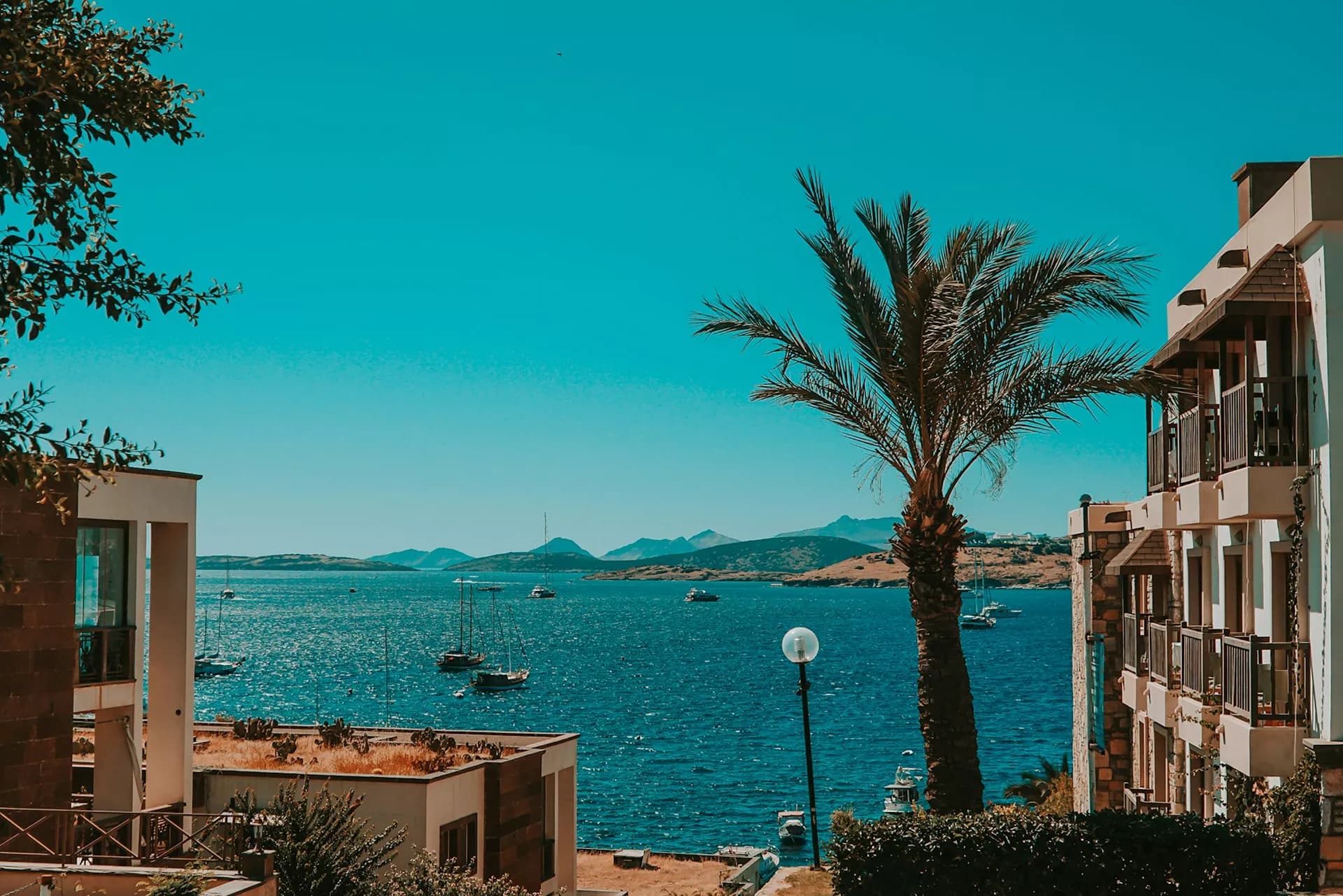
20 Best Places to Visit in Bodrum, Turkey
Bodrum combines a Seven Wonders site, a crusader castle, and 11 Aegean beaches within 60 km of coastline. All 20 Stadtly attractions mapped by zone.
Bodrum delivers something rare on the Aegean: a genuine Wonder of the Ancient World, an Ottoman fortress still dominating the harbor, and more than a dozen beaches ranging from family-shallow to celebrity-reserved — all within roughly 60 km of coastline. In 2024, Turkey welcomed a record 62.2 million international visitors (Tourism Reporter, Turkey's Tourism Triumph, October 2025), and the Bodrum Peninsula draws a disproportionate share of that traffic.
The thing first-timers miss: Bodrum isn't just one beach town. It's a peninsula roughly 60 km from east to northwest, with distinct north and south coasts pulling different crowds entirely. This guide covers all 20 Stadtly-supported attractions — historic sites, bays, beaches, and marina destinations — organized by location so you can pick the sections that fit your trip.
Browse all 20 on Stadtly's interactive Bodrum map →
Key Takeaways
- In 2024, Turkey welcomed a record 62.2 million international visitors (Tourism Reporter, October 2025), with Bodrum Peninsula among the country's top coastal draws.
- Bodrum Castle and the Museum of Underwater Archaeology share one ticket (€20 per adult in 2025) and one entrance — plan 2–3 hours to cover both.
- The Mausoleum at Halicarnassus is physically embedded in Bodrum Castle: the Knights Hospitaller quarried its stones to build the fortress between 1402 and 1494.
- The north peninsula (Türkbükü, Yalıkavak) runs luxury-to-marina; the south (Aspat, Karaincir) runs wild-to-family. Different coasts suit different trips.
What Makes Bodrum Worth Visiting?
Bodrum is one of the few places where you can stand on the foundation of an ancient Wonder of the World before noon and be swimming in turquoise water by early afternoon. The peninsula's recorded history runs roughly 2,400 years — from the Mausoleum at Halicarnassus, completed around 351 BC, through the Ottoman windmills still standing on the ridge above town — and all of it is within easy reach of a genuinely good beach.
The detail most visitors miss: when the Knights Hospitaller built Bodrum Castle between 1402 and 1494, they didn't source new stone. They quarried what remained of the Mausoleum — one of the Seven Wonders — and built the fortress from its rubble. The word "mausoleum" itself entered every European language from this one structure, completed in 351 BC for the Hecatomnid ruler Mausolus (Britannica, Mausoleum of Halicarnassus). Two of the 20 attractions in this guide are made of the same stone. That's a more interesting story than most travel content about Bodrum acknowledges.
The peninsula's character divides by coast. The north faces a sheltered bay and runs from quiet fishing villages (Torba, Gündoğan) to the superyacht glamour of Türkbükü and Yalıkavak Marina. The south faces the open Aegean and splits between wild, undeveloped coves (Aspat Bay) and the peninsula's top family beach (Karaincir). The town at the center has the history. First-time visitors consistently underestimate how spread out this all is — a full peninsula visit takes at least three days.
Bodrum Town Historic Core — 7 Attractions Worth Walking To
All seven sites in this section cluster within or just above Bodrum town center. You can walk between every one of them. Bodrum Castle and the Museum of Underwater Archaeology share a single ticket and a single entrance; the remaining five are free. For any visitor with an interest in history, this is the natural first day on the peninsula.
Bodrum Castle
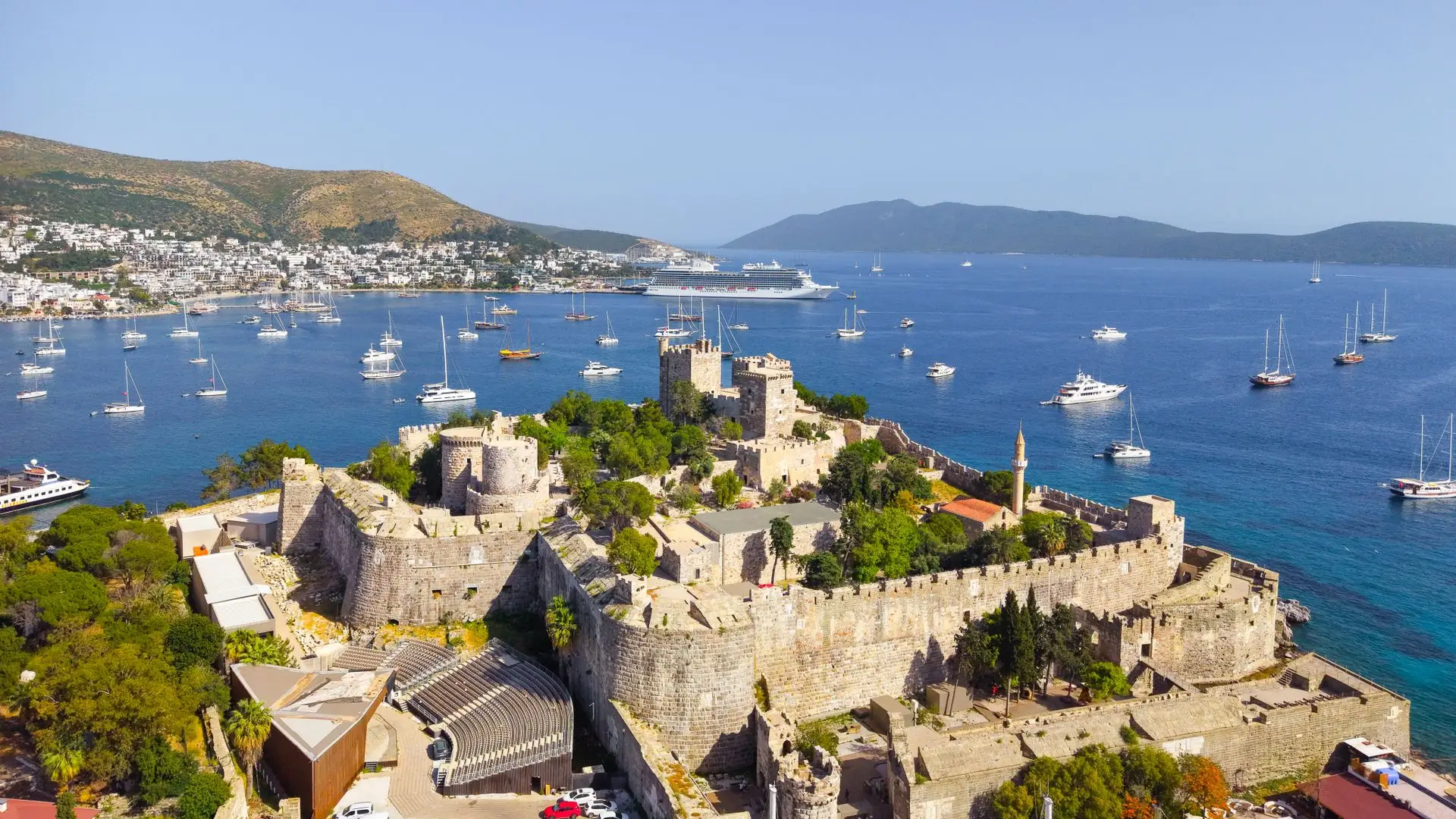
Built from 1402 onward by the Knights Hospitaller — the same crusading order that held Rhodes — Bodrum Castle (St. Peter's Castle, or Kale in Turkish) rises directly from the harbor and defines the town's skyline from every angle. What makes it architecturally distinctive is its multinational construction: different contingents of knights built their own towers, which is why the English Tower, French Tower, German Tower, and Italian Tower are each stylistically separate.
The battlements offer some of the best harbor and Aegean views in town. Admission is shared with the Museum of Underwater Archaeology below. In summer (June through October), the complex stays open until 9:00 PM (bodrum-museum.com, December 2025). An early-evening visit is a good call — the heat drops, and the harbor turns gold.
The Museum of Underwater Archaeology
Housed across several towers inside Bodrum Castle, the Museum of Underwater Archaeology holds one of the world's most significant collections of ancient shipwreck artifacts. The centerpiece is the Bronze Age Hall, which displays material from the world's oldest known recovered shipwreck — a vessel dating to approximately the 14th century BC, excavated off Cape Uluburun. The Glass Wreck Hall and the Carian Princess Room are equally impressive stops.
Admission in 2025 is €20 per adult and covers both the museum and the castle (bodrum-museum.com, December 2025). Most visitors underestimate how long this takes. The collection is spread across multiple towers connected by staircases and ramparts, and two hours is a minimum for a thorough visit.
The museum holds what is arguably the most important single artifact of Bronze Age seafaring in any European collection, yet it routinely gets less attention than the castle walls surrounding it. If you're allocating time, weight the museum heavier.
Mausoleum at Halicarnassus
The Mausoleum at Halicarnassus was one of the Seven Wonders of the Ancient World, completed around 351 BC as the tomb of Mausolus, ruler of Caria. It stood approximately 148 feet tall — roughly 14 stories — and was so architecturally distinctive that its name became the universal word for grand funerary monuments in every Western language (Britannica, Mausoleum of Halicarnassus).
What remains today is the excavated foundation, scattered frieze fragments, and a small site museum. The structure largely disappeared over the centuries: earthquakes brought it down, and the Knights Hospitaller finished the job by quarrying its stones for Bodrum Castle between 1402 and 1494. Some of those original blocks are still visible in the castle's lower walls if you know what to look for. The site is worth visiting less for spectacle and more for that layered history connecting it to almost everything else in the town center.
Ancient Theatre of Halicarnassus
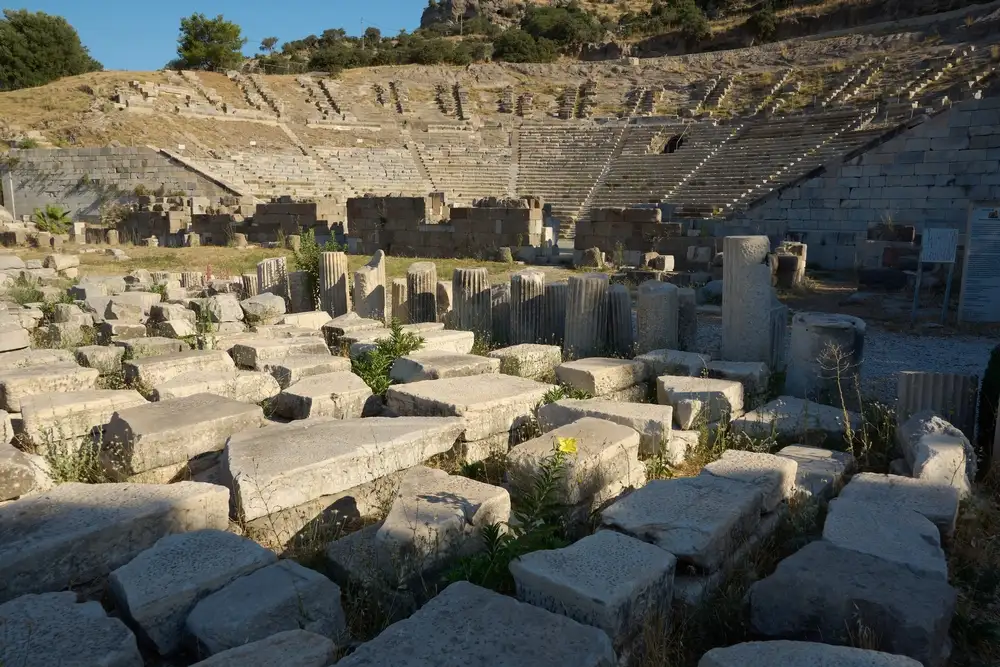
Cut into the hillside above Bodrum town, the Ancient Theatre of Halicarnassus was originally built in the 4th century BC under Mausolus — making it a contemporary of the Mausoleum — and significantly enlarged during the Roman era in the 2nd century AD. At its peak it seated between 10,000 and 13,000 spectators; the restored modern configuration holds around 3,100 (Ancient Theatre Archive, Theatre at Halicarnassus).
Entry is free, and it's accessible on foot from town, though the uphill approach takes 10–15 minutes. The upper tiers look directly over the harbor and the Aegean — an alignment that's deliberate and was clearly part of the original design. Summer performances still take place here occasionally. It's worth the climb even if ancient history isn't your focus, purely for the view.
Myndos Gate
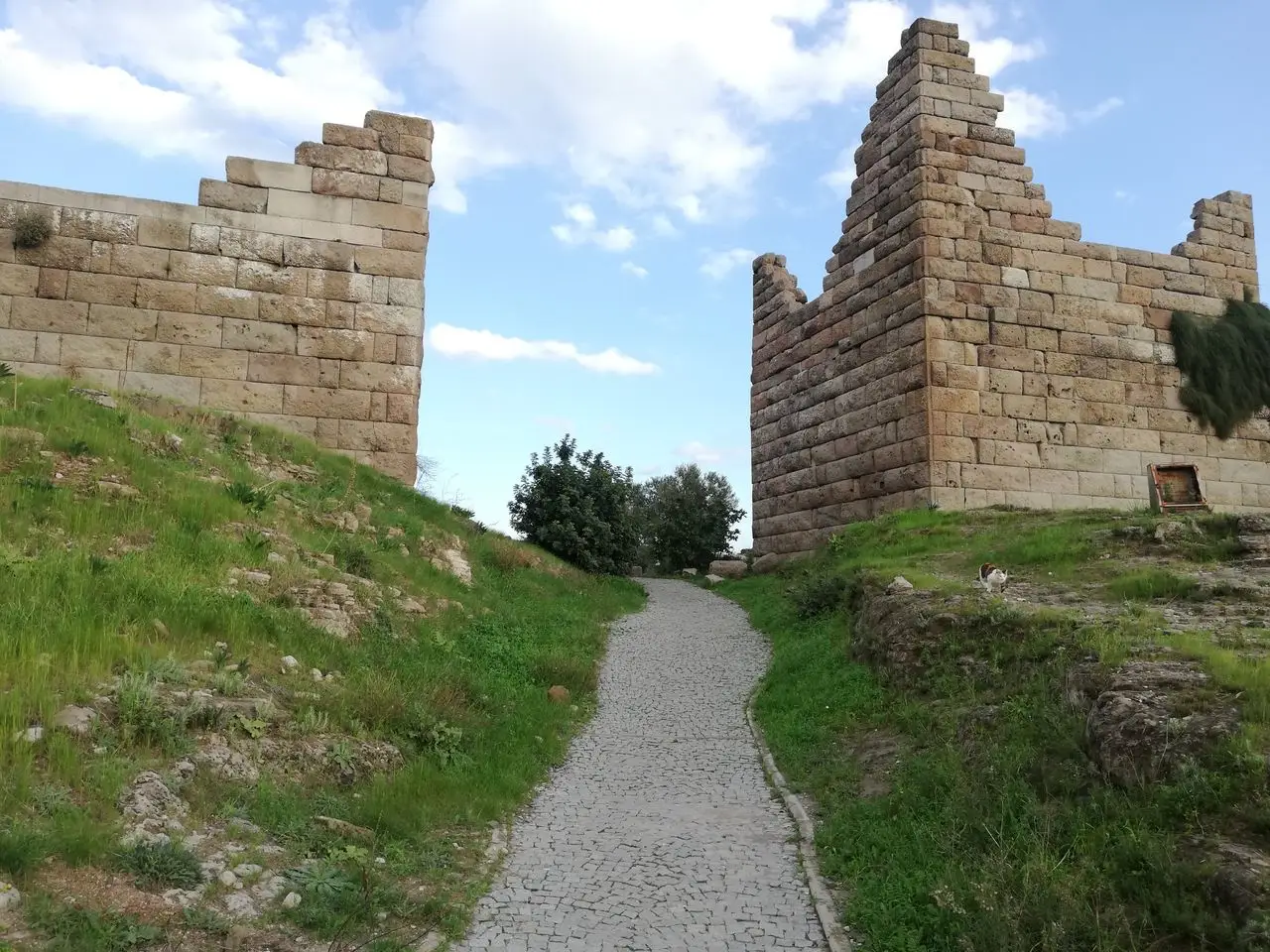
Myndos Gate is the most intact surviving section of ancient Halicarnassus's defensive walls, and it carries a historical footnote that almost no travel content bothers to mention. In 334 BC, Alexander the Great launched his first assault on the city at this gate. It held. His forces retreated, regrouped, and eventually broke through a different section of the wall — but the gate didn't yield.
That story is absent from nearly all Bodrum travel coverage despite being one of the more concrete Alexander-related historical sites anywhere in Turkey. The gate is free to visit, it tends to be quiet even in peak season, and it's a 10-minute walk northwest of the marina. The visible masonry dates to the Hecatomnid period, and sections of the original towers remain standing.
Bodrum Windmills
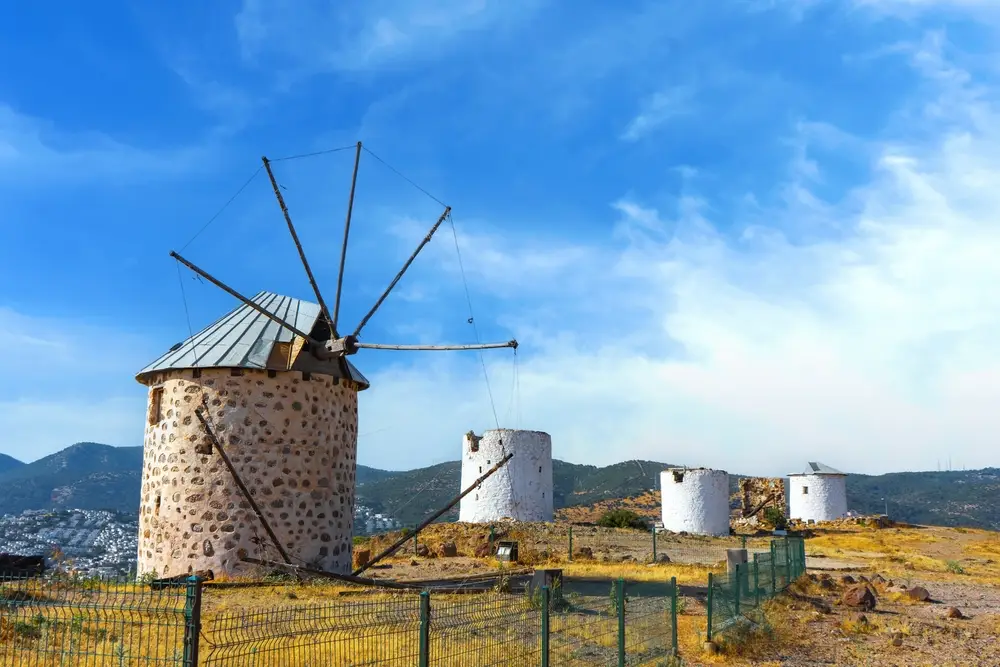
Seven 18th-century Ottoman windmills stand on the ridge separating Bodrum town from Gümbet, and they were in active use grinding grain until the 1970s (holidaystobodrum.com, Bodrum Windmills, 2024). They're frequently photographed, but what most visitors don't realize is what the viewpoint delivers: from the ridge, you can see both Bodrum Bay to the east and Gümbet Bay to the west simultaneously. No other accessible spot near town offers that dual-bay panorama.
Entry is free. The uphill walk from the bazaar takes about 15 minutes. Sunset timing is worth planning around — the light over the harbor from this height is one of the better free views on the peninsula.
Bodrum Bazaar
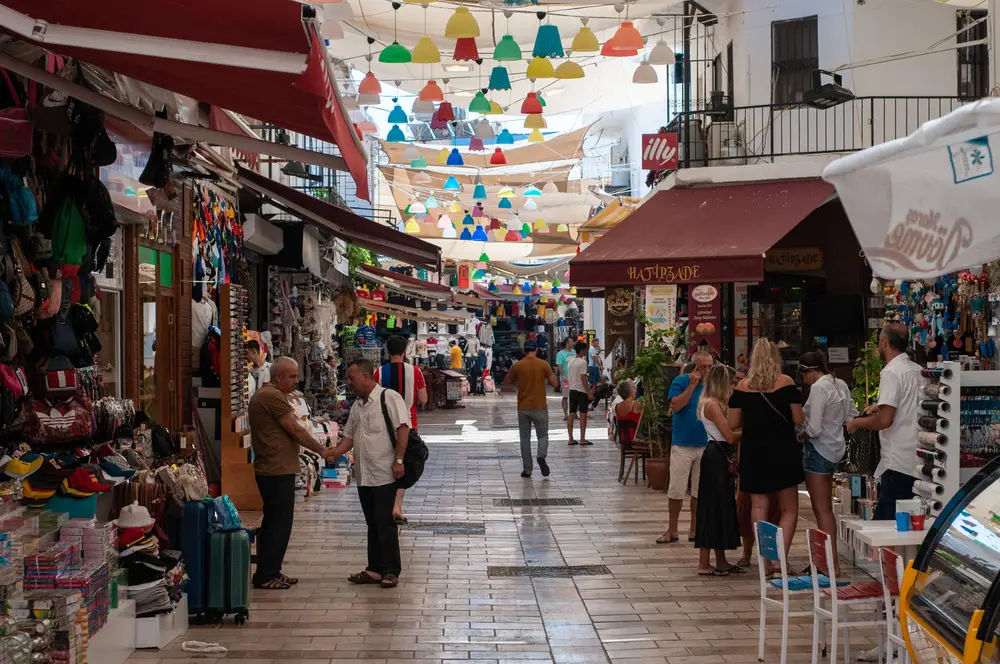
Bodrum's bazaar quarter runs through the streets behind the harbor — a mix of covered stalls and open lanes selling spices, ceramics, leatherwork, and sponges. The sponges aren't a tourist affectation: Bodrum has a genuine sponge-diving heritage, and locally harvested Aegean sponges have been sold from these streets for generations.
The bazaar is free to walk and most active in the morning and evening. It connects naturally to a practical loop: Myndos Gate sits 10 minutes northwest, and the Windmills ridge is 15 minutes uphill to the southeast. These three can be combined in about two hours without rushing.
Planning a historic day in Bodrum? Map all 7 sites and build your route on Stadtly →
Bodrum Town Waterfront
Right below the castle walls, two stops define the town's seafront. The marina stretches west of the castle; the main town beach sits east. Both are walkable from the historic core and make natural stopping points between sightseeing.
Bodrum Marina
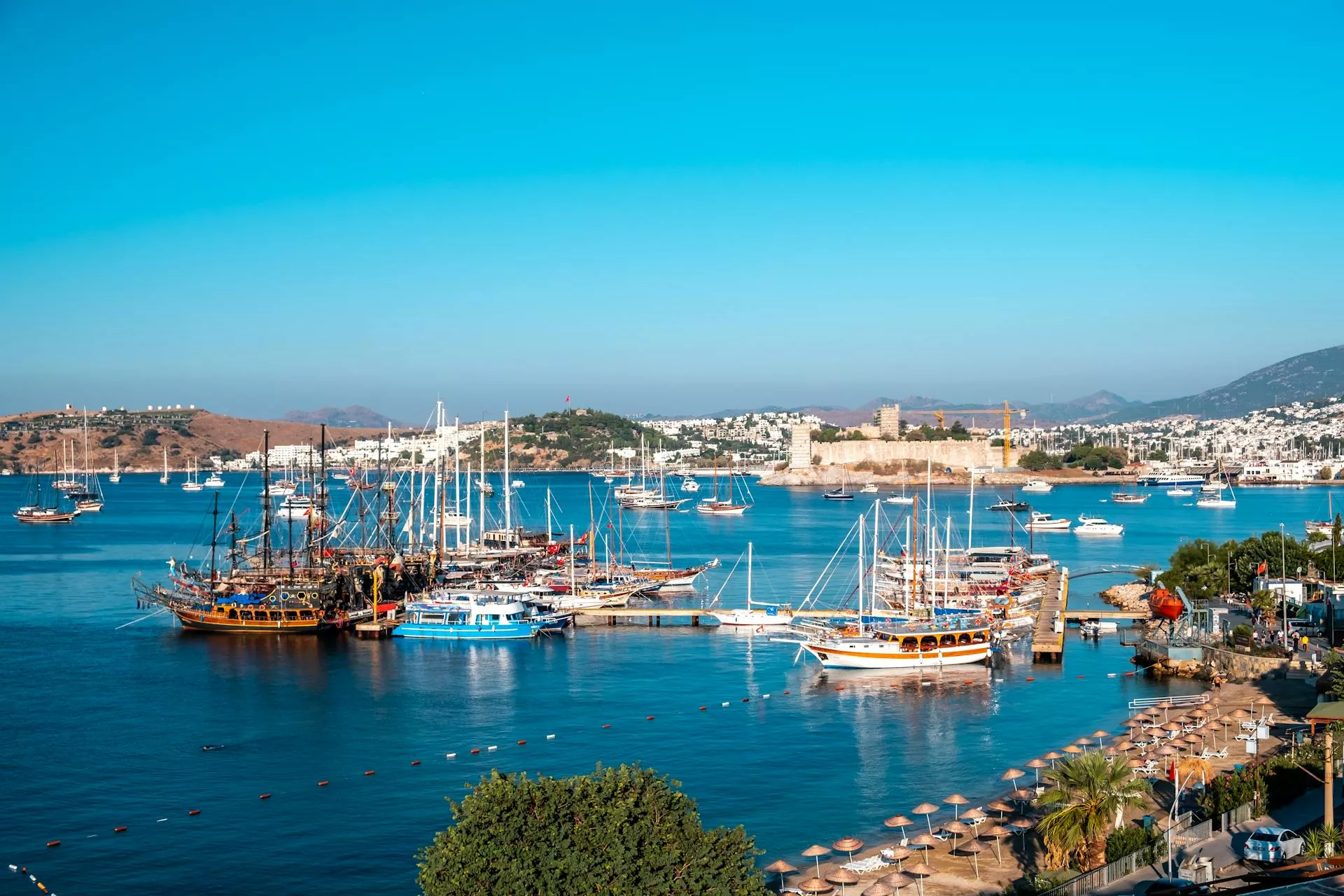
Bodrum Marina is one of the largest and most active yacht harbors on the Aegean coast, lined with restaurants, fish tavernas, and cafés facing the castle across the water. For visitors who aren't arriving by boat, the marina's value is mostly atmospheric: the evening promenade along the harbor is where the town's social life concentrates in summer, and the castle reflection over the water after dark is one of the more memorable sights in Bodrum.
It's also the departure point for gulet day cruises — traditional wooden-hulled Turkish sailboats that tour the bays and coves of the peninsula. If you'd rather reach Aquarium Bay or Bardakçı Bay by water than by road, this is where those trips leave from. Entry to the marina is free; the restaurants range from budget to premium.
Bodrum Beach (Kumbahçe Beach)
Bodrum Beach — officially Kumbahçe Beach — sits just east of the castle and marina, making it the most convenient swimming point for visitors staying anywhere near the town center. The beach is a mix of sand and pebble, the bay stays reasonably calm, and public access is free alongside a stretch of paid beach clubs that claim the better-positioned sunbeds.
It isn't the prettiest or quietest beach on the peninsula. For a dedicated beach day, the southwest arc or the north coast is a better use of time. But as a post-sightseeing swim — castle in the morning, cool-off before lunch — it's hard to beat on pure convenience.
Southwest Bays and Beaches Near Bodrum Town
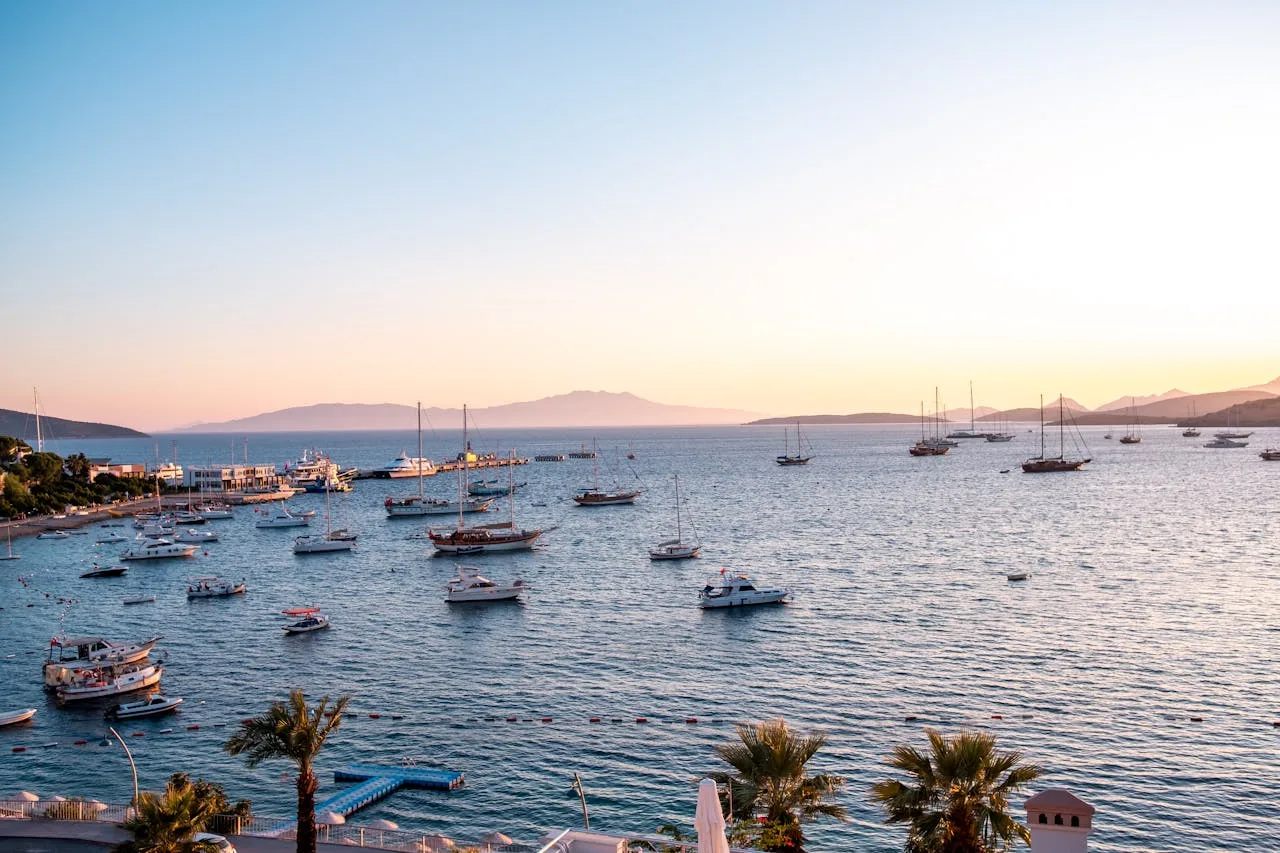
The southwest arc of the peninsula — Bardakçı to Ortakent — is the most accessible stretch of coast for visitors based in Bodrum town. Most of it is reachable in 5–20 minutes by dolmuş (the shared minibus network running from Bodrum's central bus station). Each of these beaches has a distinct character. Don't treat them as interchangeable.
Bardakçı Bay
Bardakçı is the closest natural bay to Bodrum town — a small, sheltered cove a few minutes west of the marina. The water is calm and clear, the beach is a mix of pebble and sand, and the atmosphere is quieter and more neighborhood-feeling than the organized beach clubs further along the coast. Families with young children tend to prefer it over Gümbet for exactly that reason.
There's a practical combination worth noting: the Bodrum Windmills sit on the ridge directly above Bardakçı. You can walk the windmills viewpoint in the morning and descend to the bay for a swim before lunch — no car or dolmuş required.
Aquarium Bay
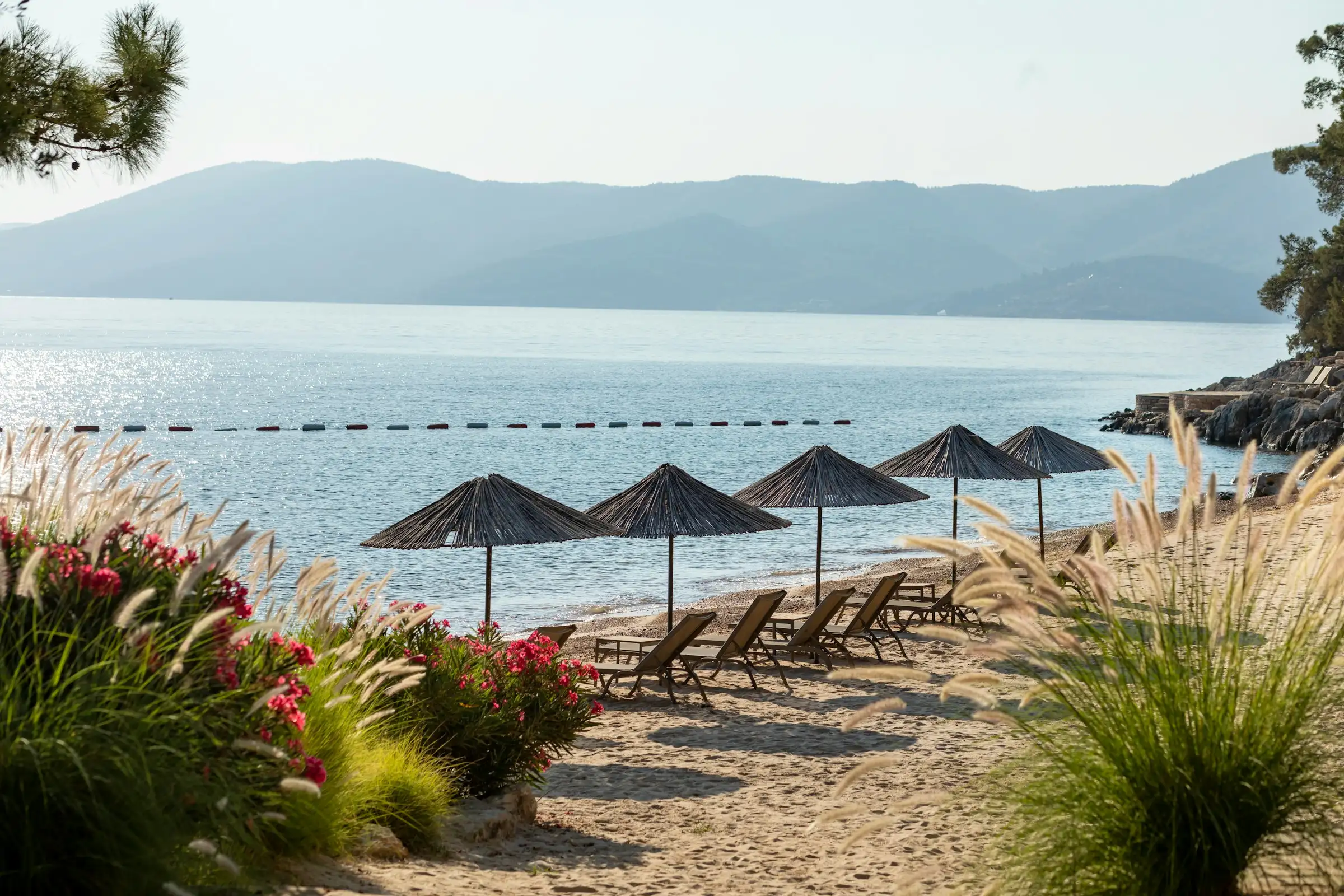
Aquarium Bay gets its name from the water clarity — the kind of visible-seafloor, fish-school visibility that earns a cove its reputation among snorkelers. It sits just south of Bardakçı, tucked against a rocky shoreline that keeps it less exposed than the sandy beaches further along the coast.
Facilities are minimal. There are no organized beach clubs, and food vendors nearby are limited. The right approach is to arrive by boat from Bodrum Marina (day-cruise boats frequently stop here) or by scooter, bring what you need, and treat it as a snorkeling destination rather than a sunbed day. For the right traveler, it's one of the most appealing bays near town.
Gümbet Beach
Gümbet is Bodrum's loudest beach — a long, straight sandy arc immediately west of the windmills ridge, about five minutes from Bodrum town by dolmuş. The water-sports infrastructure is extensive: jet skiing, parasailing, banana boats, and pedalos operate from the beach throughout the day in season. The beach club strip runs the length of the bay.
It's a lively, young-leaning atmosphere. If that's what you want from a Bodrum beach day, Gümbet delivers it more completely than anywhere else on the peninsula. If you want quiet, look elsewhere — there are better options a few kilometers further along the coast.
Camel Beach
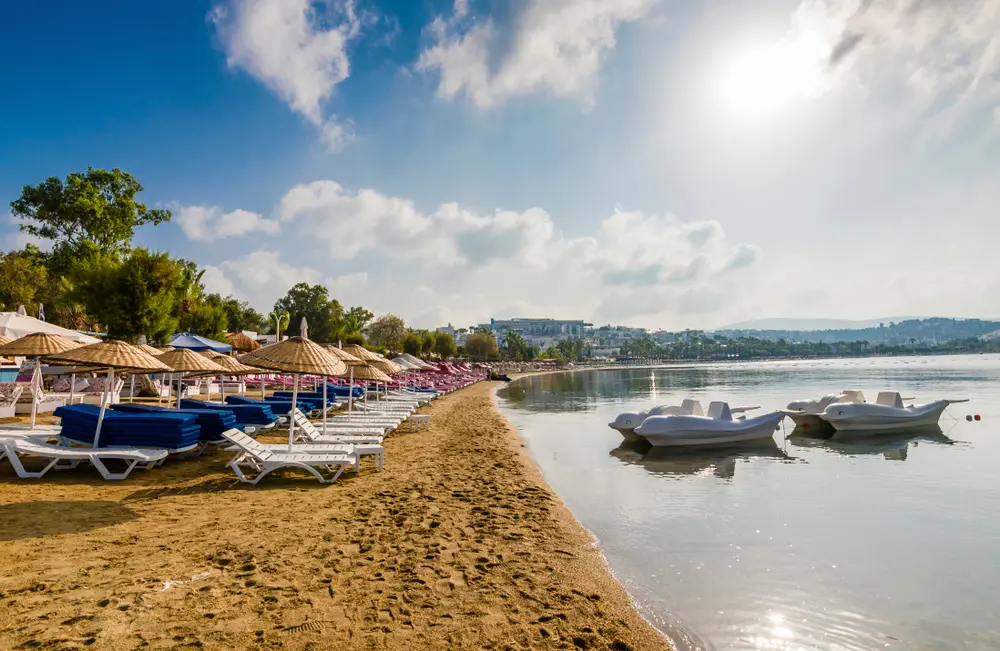
Camel Beach is named for the camel rides historically offered along the sand. It's a wide, open sandy beach toward Ortakent, with a relaxed, family-friendly character and reasonable facilities: sunbeds, umbrellas, and cafés operate here in season.
The open bay catches sea breezes that help manage the heat in mid-summer. It's less organized than Gümbet and less secluded than Bardakçı — a practical middle ground for visitors who want a decent sandy beach without the party-beach energy or the inconvenience of limited facilities.
Ortakent Beach
Ortakent sits at the far end of the southwest arc — a long, flat, sandy stretch that's one of the best free public beaches near Bodrum town. The beach is wide, the sand is soft, and public access runs alongside private beach-club sections. It's connected to Bodrum town by dolmuş throughout the season.
Ortakent draws more domestic Turkish visitors than the beaches closer to town, which shifts the atmosphere away from package-holiday toward local summer. In late June and September — outside the August peak — it's one of the stronger options on the southwest coast.
South Peninsula Beaches
The south coast faces the open Aegean and Gökova Bay, giving it a different character than the sheltered southwest: cleaner water, stronger swell on windy days, and significantly less development. Two Stadtly stops sit here — and they're as different from each other as any two beaches on the peninsula.
Aspat Bay
Aspat Bay is large, largely undeveloped, and about as far from the organized beach-club experience as Bodrum gets. The shoreline is rocky-pebbly, the water is clear with the depth and open exposure that the sheltered coves can't match, and the hillside above the bay holds the ruins of an ancient watchtower that adds a layer of history to an otherwise quiet afternoon.
Access requires a car or scooter — there's no reliable dolmuş connection. Facilities are minimal. The open swell makes it less suitable for very young children, and on windy days it can get choppy. Those trade-offs are exactly what makes it appealing to travelers who want seclusion over convenience.
Karaincir Beach
Despite sitting on the less-accessible south coast, Karaincir has a strong reputation as the peninsula's best family beach. The bay is long, the sand is good, and the water stays unusually shallow for a considerable distance out — the kind of knee-depth calm that lets young children swim without concern. Sunbed rentals and cafés operate from the beach, and the access road is paved.
The south coast's greater distance from Bodrum town (roughly 35 km by road) keeps it quieter than the southwest arc even in August. That combination of facilities, calm water, and manageable crowds is why families specifically seek it out rather than settling for a closer option.
North Peninsula: From Village Coves to Superyacht Marinas
The north coast faces the sheltered bay of Gökova and draws a noticeably different crowd from the rest of the peninsula. Türkbükü is the most glamorous address in Bodrum; Yalıkavak Marina rivals anything in the western Mediterranean. But the same stretch holds some of the peninsula's quietest village beaches. The range here is wider than anywhere else.
Torba Beach
Torba is a quiet fishing-village bay about 10 km north of Bodrum town. It's one of the most genuinely low-key options on the peninsula — pebbly-sandy shore, calm sheltered water, traditional fish restaurants along the waterfront, and a village character that hasn't been packaged for international tourism.
The contrast with Türkbükü — about 10 km further south along the same coast — is striking given the proximity. Same coastline, completely different scale and sensibility. Torba is reachable by dolmuş from Bodrum town, which makes it one of the more accessible quiet options if you don't want to rent a car.
Türkbükü Beach
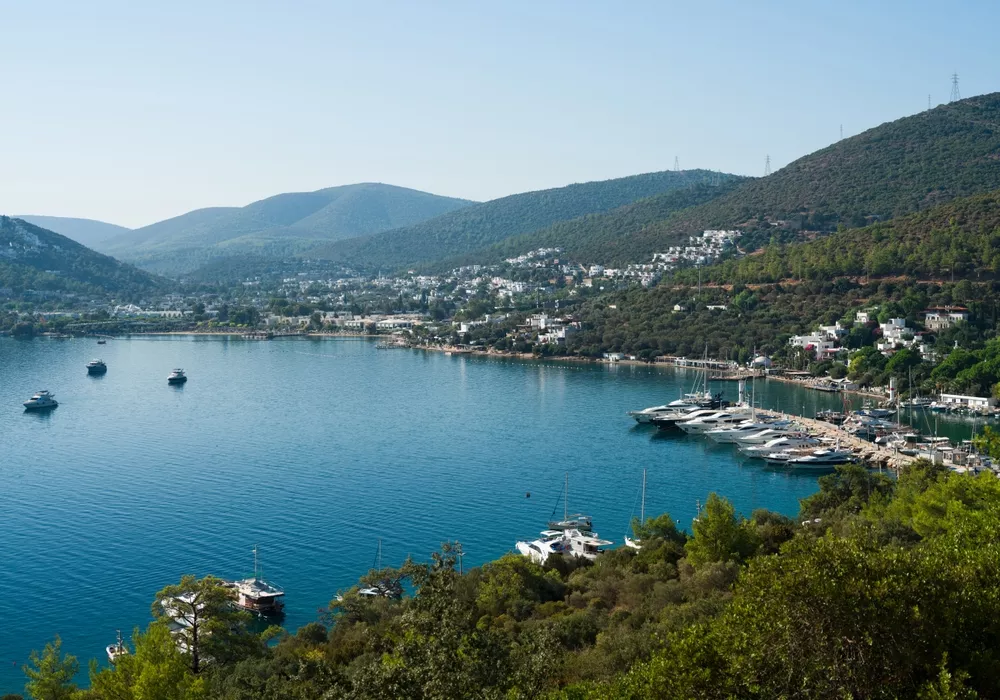
Türkbükü's reputation as the Saint-Tropez of the Aegean isn't exaggeration. The cove is slim, flanked by luxury beach clubs, and in July and August it fills with superyachts mooring offshore while Istanbul's wealthy settle in for the season. Maça Kızı is the most famous of the beach clubs, with sunbed reservations that need to be made weeks in advance in peak season.
What's notable is that the setting actually justifies the hype. The water is genuinely beautiful, the cove is sheltered, and the scale is intimate rather than resort-sprawling. Visitors who aren't planning to spend at beach-club rates can still walk the village and watch the activity. But if you're booking a table or sunbeds in August, do it well in advance.
Gündoğan Beach
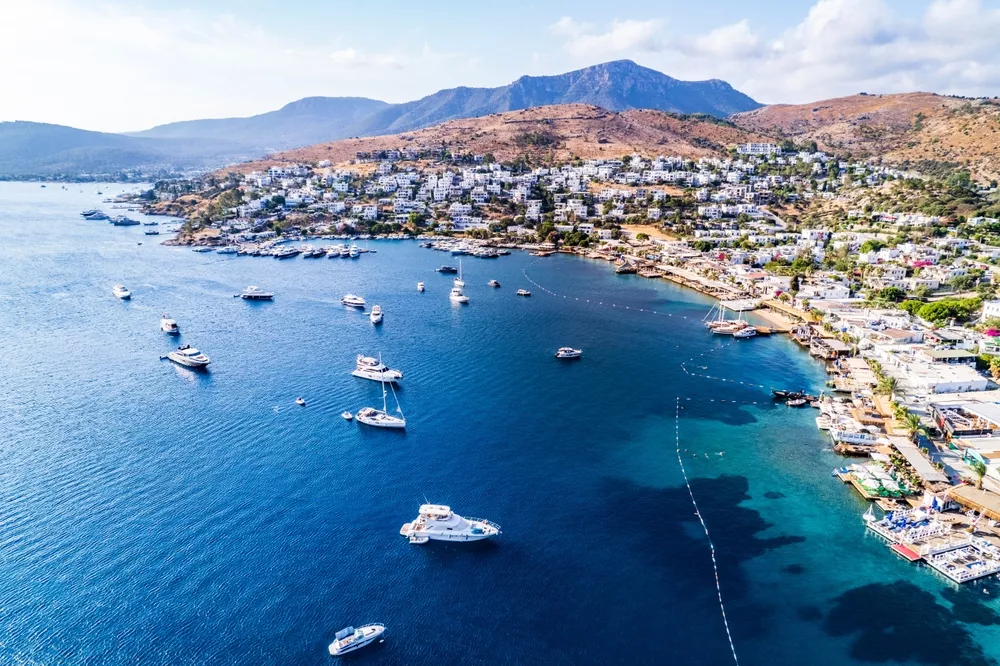
Gündoğan sits midway along the north coast, between Türkbükü and Yalıkavak, and is considerably quieter than either. The bay is small, the beach is pebbly-sandy, and the village atmosphere is genuine — most visitors here are domestic Turkish tourists rather than the international crowd concentrated at the peninsula's more prominent destinations.
The weekly farmers' market in Gündoğan is worth timing a visit around: local produce, olive oil, cheese, and handmade goods in a setting that hasn't been optimized for tourism. For travelers renting a car to tour the north coast, it works as a natural mid-route stop between the two bigger draws on either side.
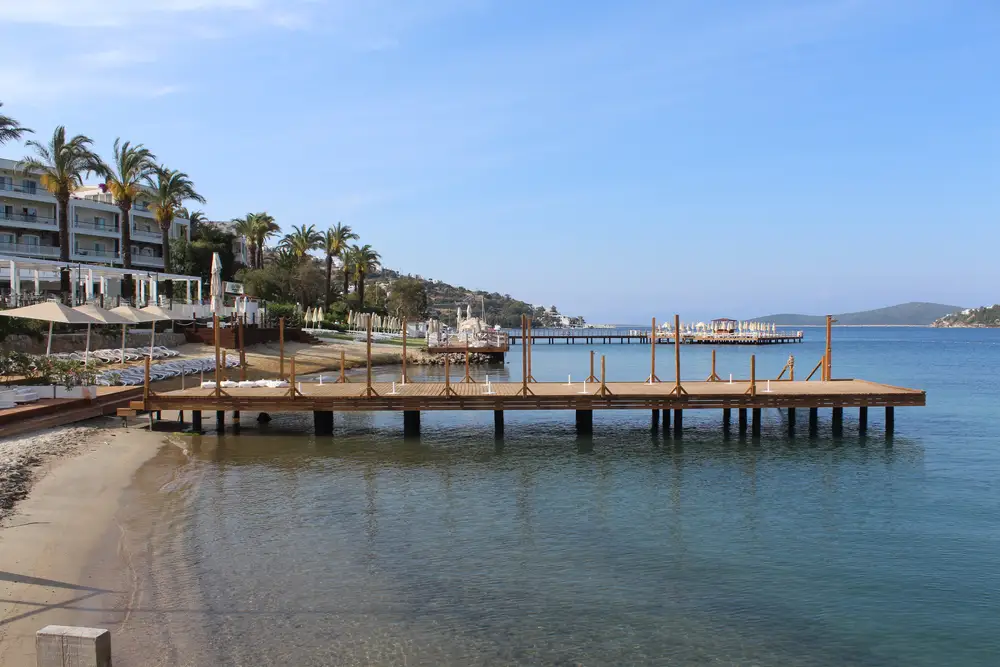
Yalıkavak Marina
Yalıkavak Marina is different in kind from the rest of the peninsula's coastal offerings — less a beach destination and more a marina-town built to a contemporary five-star specification. The Palmarina complex accommodates large superyachts, and the waterfront dining strip running along it is one of the better concentrated restaurant selections on the peninsula.
The weekly Pazar market draws both day visitors from Bodrum town and people off the boats: fresh produce, local olive oil, honey, spices, and cheese in an outdoor market that runs most of the year. The piers face west, making Yalıkavak one of the better sunset-watching points on the peninsula. It's 35 km from Bodrum town and is best reached by car.
How Do You Get Around the Bodrum Peninsula?
The Bodrum Peninsula stretches roughly 60 km from tip to tip, and the 20 attractions in this guide are spread across every part of it. Getting around is more of a logistics question than it first appears.
Walking covers everything in the historic core — all seven town-center sites are reachable on foot from the marina within 20 minutes.
Dolmuş (shared minibus) is the practical choice for the southwest arc and the near-north coast. Buses run from Bodrum's central otogar to Gümbet, Ortakent, Torba, Türkbükü, Gündoğan, and Yalıkavak throughout the day in season. Fares are low and frequency is good in summer.
Car or scooter hire is necessary for the south coast. Aspat Bay and Karaincir Beach don't have reliable dolmuş connections, and they're best visited together in a single day by road.
Boat trips from Bodrum Marina cover Aquarium Bay, Bardakçı Bay, and south-coast coves on organized day cruises. Gulet charters depart daily in season if you'd rather see those bays from the water.
Frequently Asked Questions
What is Bodrum famous for?
Bodrum is best known for three things that rarely appear in the same destination: the Mausoleum at Halicarnassus (one of the Seven Wonders of the Ancient World), Bodrum Castle (a 15th-century crusader fortress still dominating the harbor), and its Aegean beaches. The town is also the birthplace of Herodotus — the ancient Greek "Father of History" — and a historic center of Turkey's gulet (traditional wooden sailboat) building tradition. That combination of ancient history, medieval architecture, and Aegean coastline is what sets it apart from other Aegean resorts.
How many days do you need to see Bodrum?
Three to four days covers the peninsula well: day one for the historic core (all walkable), day two for the southwest beaches, day three for the north peninsula from Torba to Yalıkavak, with an optional extra day for the south coast. Day-trippers can cover the seven town-center sites in a single long day — but they won't see any of the peninsula beaches. Budget more time than you think you need; most visitors wish they'd stayed longer.
What is the best beach in Bodrum?
It depends on what you want. Karaincir Beach is the strongest choice for families — shallow, sandy, calm, and equipped with facilities. Türkbükü is the luxury option. Gümbet is best for water sports and a lively atmosphere. Aspat Bay suits travelers who want seclusion and natural scenery over convenience. Bardakçı Bay is the best no-dolmuş option close to Bodrum town — a sheltered cove you can walk to from the marina.
Can you visit Bodrum Castle and the Museum of Underwater Archaeology on the same ticket?
Yes — they share a single admission of €20 per adult (2025) and use the same harbor-side entrance (bodrum-museum.com, December 2025). The museum is distributed across several towers inside the castle, so a combined visit takes 2–3 hours. In summer (June through October), the complex stays open until 9:00 PM, which makes an early-evening visit a practical way to avoid the mid-afternoon heat while still getting full access to both.
What is the best time to visit Bodrum?
May to June and September to October offer the best combination: warm weather, manageable prices, and thinner crowds. July and August are hot, expensive, and crowded — August particularly so on the north coast. April is a good option for the archaeological sites (fewer visitors, mild temperatures), though the water is still cool for swimming. November through March is largely quiet, with many beach facilities and some restaurants closed.
Bodrum Has More Range Than Its Reputation Suggests
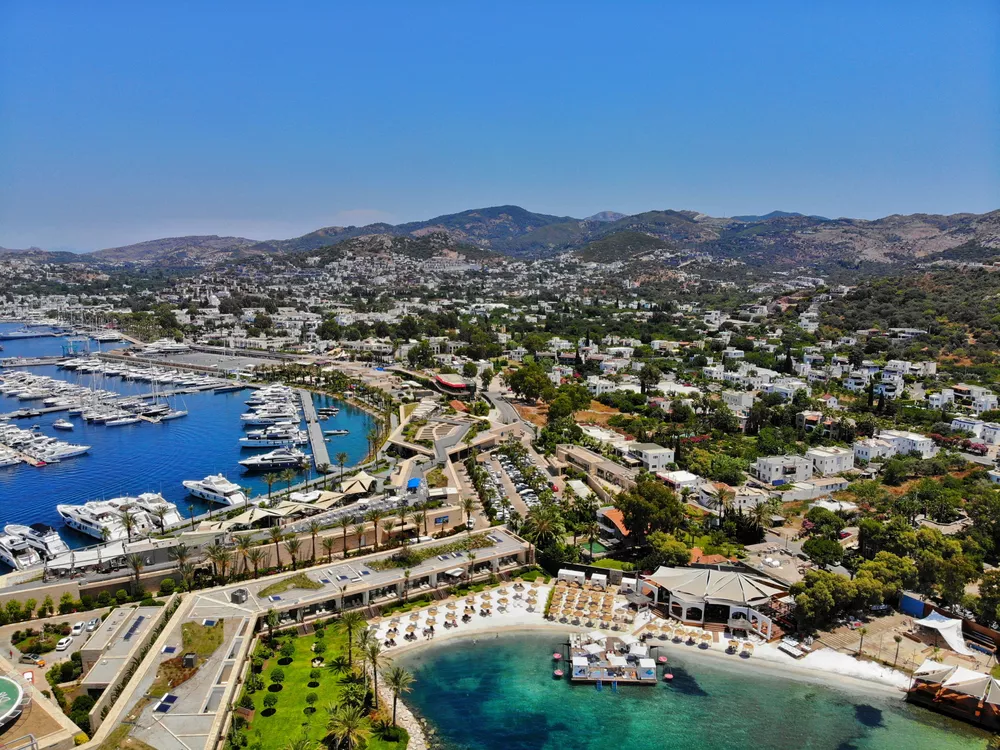
The peninsula divides into four distinct zones, and no single day touches all of them. The historic core offers two millennia of visible history within a 1 km radius. The southwest arc runs from sheltered family coves to the peninsula's most organized beach-club strip. The south coast is less developed — the best family beach and the most secluded bay both sit here, 35 km from town. The north coast runs from authentic fishing-village harbors to a five-star marina town.
Most Aegean destinations offer either history or beaches. Bodrum makes you choose which zone to prioritize on any given day — and that's a different, better problem to have.
Sources
- Tourism Reporter, Turkey's Tourism Triumph: Record 62 Million Visitors Drive $61 Billion Revenue in 2024, retrieved 2026-06-10, tourismreporter.com
- Bodrum Museum of Underwater Archaeology, Opening Hours & Fees, retrieved 2026-06-10, bodrum-museum.com/opening-hours-fees
- Ancient Theatre Archive, Theatre at Halicarnassus (Modern Bodrum, Turkey), retrieved 2026-06-10, ancienttheatrearchive.com
- Britannica, Mausoleum of Halicarnassus, retrieved 2026-06-10, britannica.com
- Holidays to Bodrum, The Famous Windmills of Bodrum, retrieved 2026-06-10, holidaystobodrum.com/bodrum-windmills
Planning a trip to Bodrum?
Discover attractions, hotels and tours to build your perfect itinerary.
Explore Bodrum