The 16 Best Instagram Spots in İstanbul
İstanbul's most photogenic spots — Balat, Ortaköy Mosque, Galata Tower and 13 more — grouped by district, with the best light and etiquette rules for each.
İstanbul photographs like nowhere else — two empires under one skyline, the only city split across two continents, and a light that turns gold off the Bosphorus most evenings. The trouble isn't finding something worth shooting. It's that the best frames sit scattered across the historic peninsula, Beyoğlu, the Golden Horn and the Bosphorus shore, and a flat "most Instagrammable" gallery will happily send you criss-crossing the city chasing them.
In 2024 the city welcomed more than 18 million visitors (Hürriyet Daily News, Istanbul welcomed more than 18 million visitors last year, 2025), and a good share of them spend at least one day hunting photos. This guide does it differently: the 16 spots below are grouped into walkable photo districts, each with an honest note on the best light and the best angle. Where a famous "spot" comes with rules — mosque etiquette, residential streets, İstanbul's drone restrictions — we say so plainly, so you leave with keepers instead of a list of regrets.
Key Takeaways
- The single most-photographed scene in İstanbul is Ortaköy Mosque framed against the 15 July Martyrs Bridge — shoot it from the waterfront at blue hour.
- Balat is the most-photographed neighbourhood, but its colourful houses are people's homes — shoot quietly and respectfully.
- Sultanahmet's icons (Hagia Sophia, the Blue Mosque) photograph best at sunrise, before the square fills.
- Mosques are free to enter and photograph between the five daily prayers — cover your head and shoulders, remove your shoes, and skip the flash.
- Drones 500 g and over must be registered with Turkey's civil-aviation authority, and the historic centre is restricted airspace — don't count on aerial shots.
The Most Instagrammable Places in İstanbul at a Glance
İstanbul's best photo spots fall into a few walkable pockets: the colourful streets of Balat on the Golden Horn, the Bosphorus-bridge backdrop at Ortaköy, the Galata Tower and Kamondo Stairs in Karaköy, the imperial mosques and the Basilica Cistern in Sultanahmet, and the lantern-lit lanes of the Grand Bazaar. Cluster them by district and the light does the rest.
The geography matters more than any ranking. You can't sensibly shoot Balat and Sultanahmet back to back — they're a tram or a ferry apart. The trick is to pick a district per session and time the light: sunrise for the empty squares of the old city, mid-morning for Balat and the bazaars, sunset and blue hour for the Bosphorus and the Galata Bridge. If you'd rather follow a route than a shot list, our İstanbul 24-hour walking itinerary strings the peninsula icons into one morning.
| # | Spot | District | Shot type | Best light |
|---|---|---|---|---|
| 1 | Balat | Golden Horn | Colourful houses, sloping streets | Mid-morning |
| 2 | Ortaköy Mosque | Bosphorus shore | Mosque + bridge backdrop | Sunset / blue hour |
| 3 | Galata Tower | Galata | Tower + 360° rooftop view | Golden hour |
| 4 | Kamondo Stairs | Karaköy | Art Nouveau staircase | Soft midday shade |
| 5 | Hagia Sophia | Sultanahmet | Domes + interior mosaics | Sunrise |
| 6 | Blue Mosque | Sultanahmet | Six minarets, İznik interior | Sunrise / floodlit blue hour |
| 7 | Basilica Cistern | Sultanahmet | Uplit columns, Medusa heads | Any (interior) |
| 8 | Grand Bazaar | Bazaar quarter | Painted vaults, lantern shops | Mid-morning |
| 9 | Spice Bazaar | Eminönü | Spice cones, lokum, lamps | Mid-morning |
| 10 | Galata Bridge | Eminönü / Karaköy | Fishermen, ferries, skyline | Sunset |
| 11 | İstiklal Avenue | Beyoğlu | Nostalgic red tram | Blue hour |
| 12 | Maiden's Tower | Üsküdar shore | Islet tower on the water | Sunset |
| 13 | Süleymaniye Mosque | Bazaar quarter | Courtyard + Golden Horn view | Late afternoon |
| 14 | Pierre Loti Hill | Golden Horn / Eyüp | Panoramic Golden Horn | Sunset |
| 15 | Dolmabahçe Palace | Beşiktaş | Clock Tower, gates, waterfront | Morning |
| 16 | Gülhane Park | Sultanahmet | Tulip beds (spring) | Spring mornings |
👉 Open the İstanbul photo-spots map on Stadtly
1. Balat — İstanbul's Most Colourful Streets
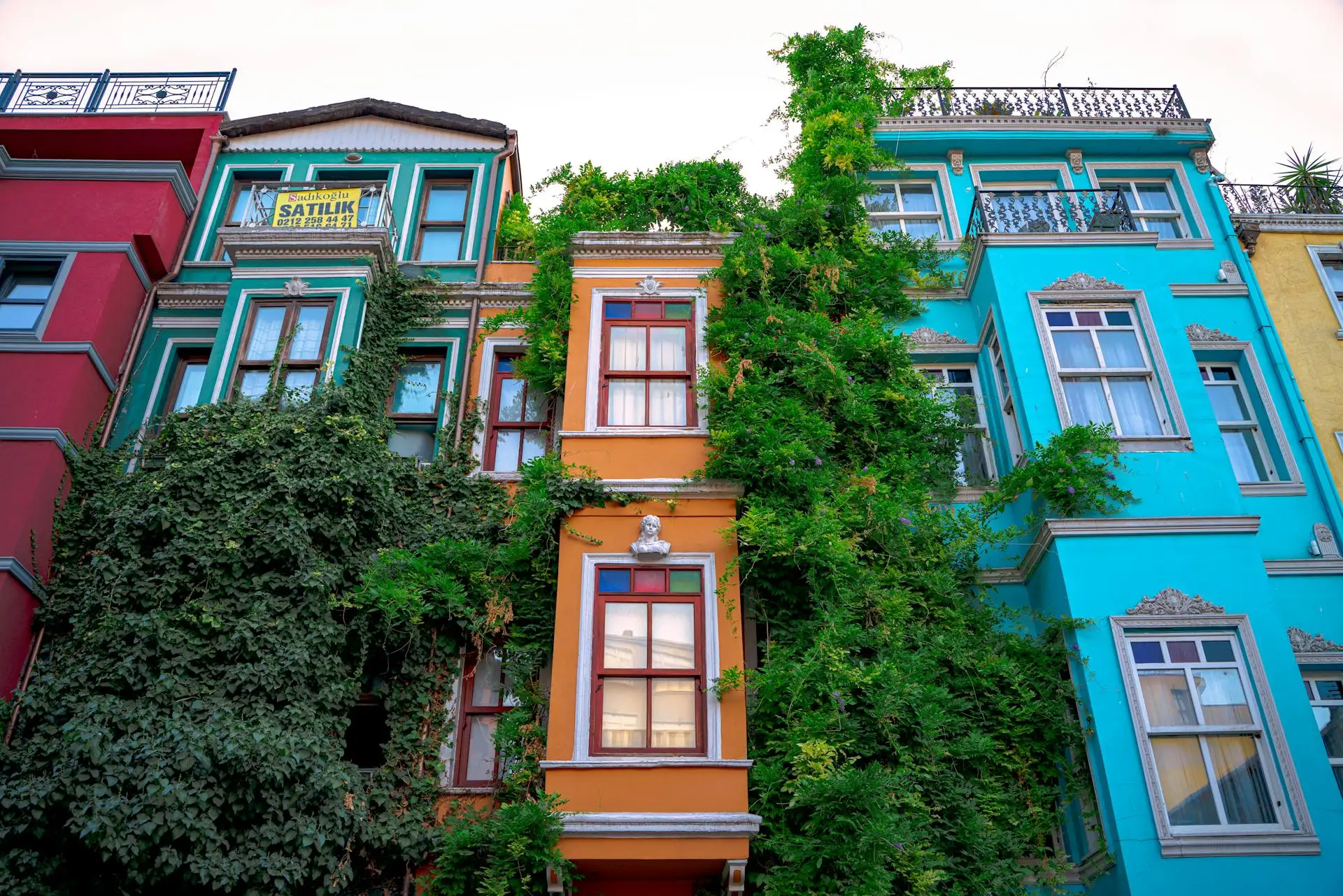
Balat, on the Golden Horn shore, is İstanbul's most photographed neighbourhood — a hillside of red, ochre, blue and pistachio terraced houses, antique shops and steep stepped lanes. The famous rows cluster around Kiremit and Vodina streets, where the painted façades stack up the slope into a single frame.
Come mid-morning, when the light falls evenly on the house fronts and the lanes haven't filled yet. The stepped streets give you the layered, house-on-house shot Balat is known for; the antique-shop windows and café fronts of neighbouring Fener fill out a wander. One honest word: these are lived-in homes, not a film set. Keep noise and tripods down, don't block doorways, and be aware that some of the staged "umbrella street" and prop-laden café corners are commercial set-ups rather than the real neighbourhood. Balat sits well off the tram line — reach it by bus, taxi or a Golden Horn ferry. The Byzantine mosaics of Chora are a short ride uphill, and we cover them in our İstanbul museums guide.
2. Ortaköy Mosque — The Bosphorus-Bridge Shot
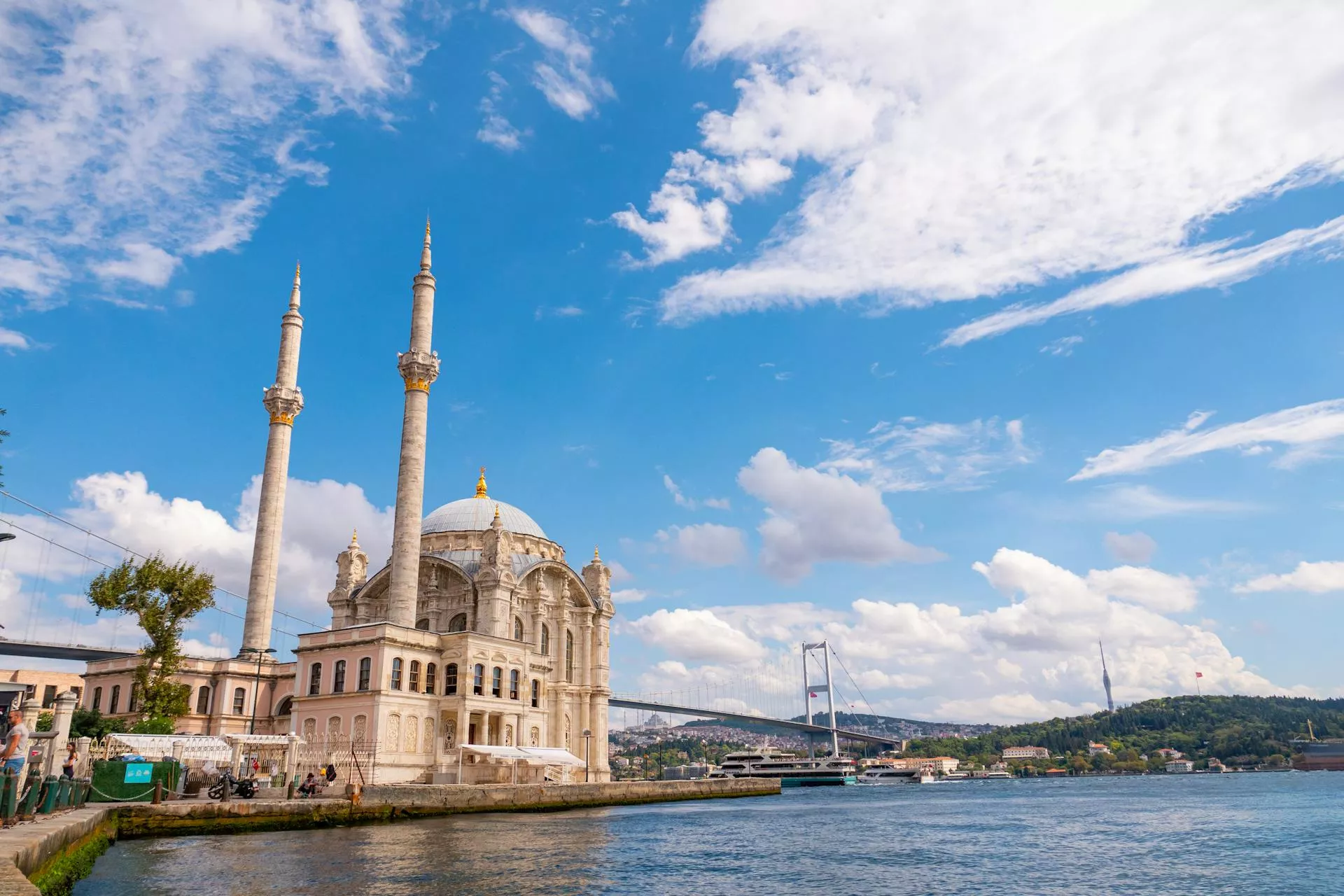
Ortaköy Mosque (Büyük Mecidiye Camii) is the single most photographed scene in İstanbul: a delicate Neo-Baroque Ottoman mosque, completed in the mid-1850s, sitting right on the water and framed against the soaring 15 July Martyrs Bridge — the span most travellers still know as the Bosphorus Bridge — directly behind it.
Shoot it from the Ortaköy waterfront square at blue hour, when the mosque and the bridge light up together and the water holds the colour. The small jetty gives you a lower, cleaner foreground if the square is busy. While you wait for the light, the lively waterfront — kumpir (loaded baked-potato) and waffle stalls — makes for good street-life frames. It's a working mosque, so time your visit around prayers and dress modestly if you go inside. Ortaköy is a short bus or taxi ride from Kabataş; it isn't walkable from the centre, so build it into a Bosphorus-shore afternoon rather than a peninsula day.
3. Galata Tower — The Tower and the View From It
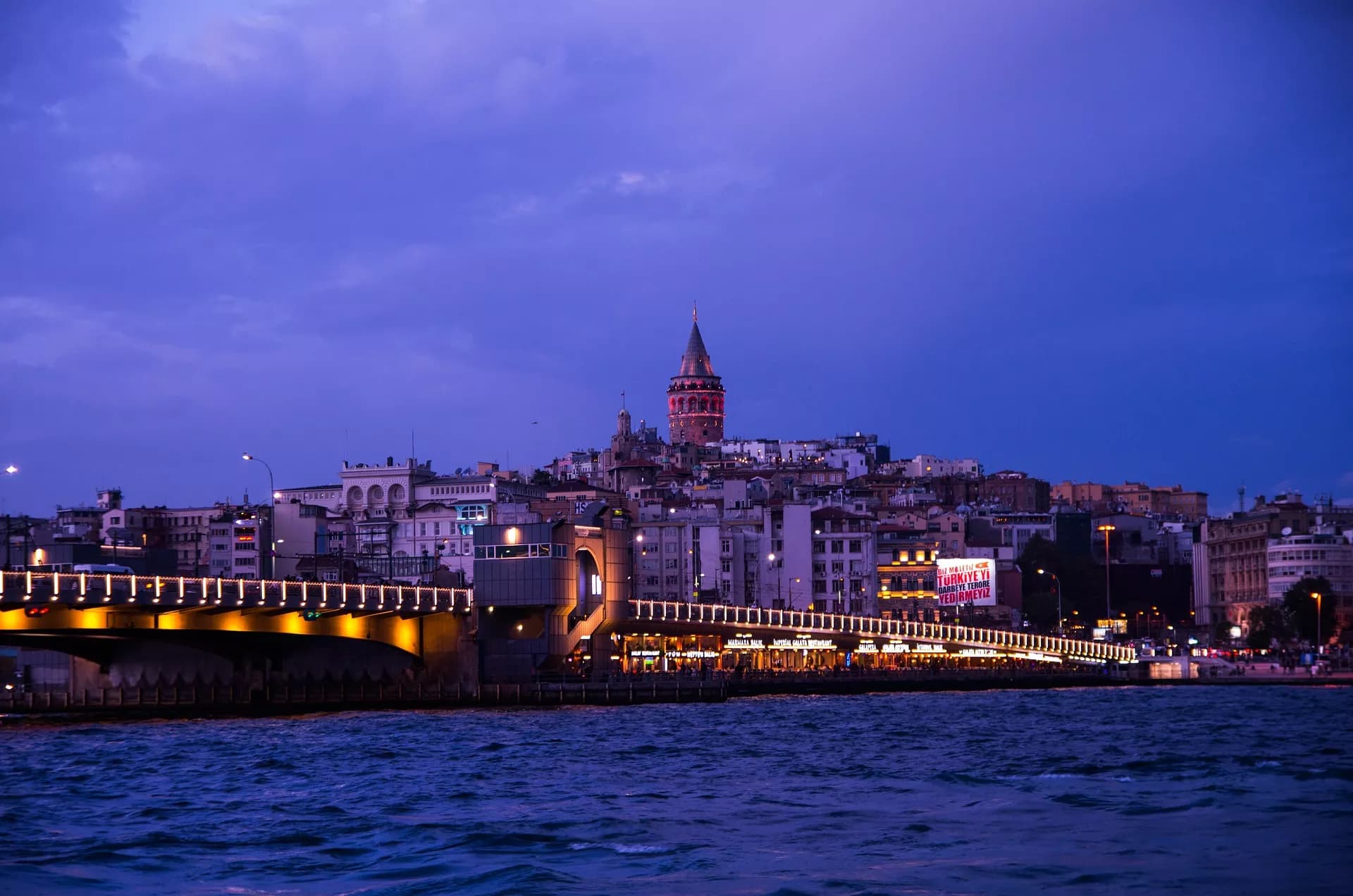
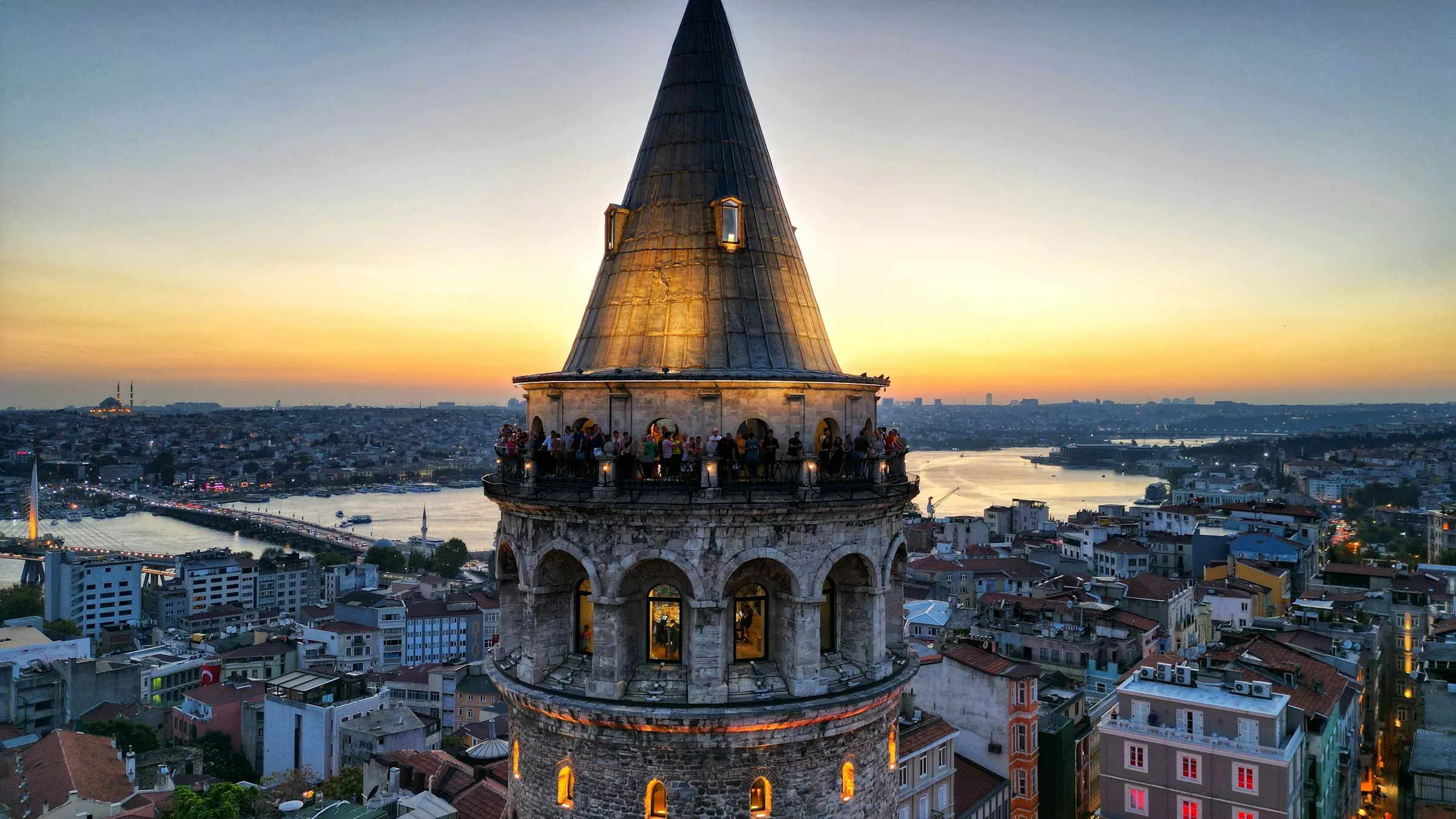
The Galata Tower works two ways for photographers. As a subject, the stout stone tower the Genoese built in 1348 rises over Karaköy's rooftops, best caught framed down one of Galata's sloping lanes or from across the Golden Horn. As a viewpoint, its 360-degree observation deck delivers arguably the finest golden-hour panorama of the historic peninsula.
The tower has been a museum since 2020, when it passed to the Ministry of Culture and reopened with exhibition floors below the deck (Müze İstanbul, Galata Tower). Tickets are timed, and the queue is real — aim for opening or the last entry of the day, which also lands you the best light up top. Down at street level, the lanes radiating from the base give you the tower-over-rooftops shot without paying to go in. It anchors the Galata–Karaköy cluster, with the Kamondo Stairs just downhill. With two days, the 48-hour first-timer itinerary builds this whole district into Day 2.
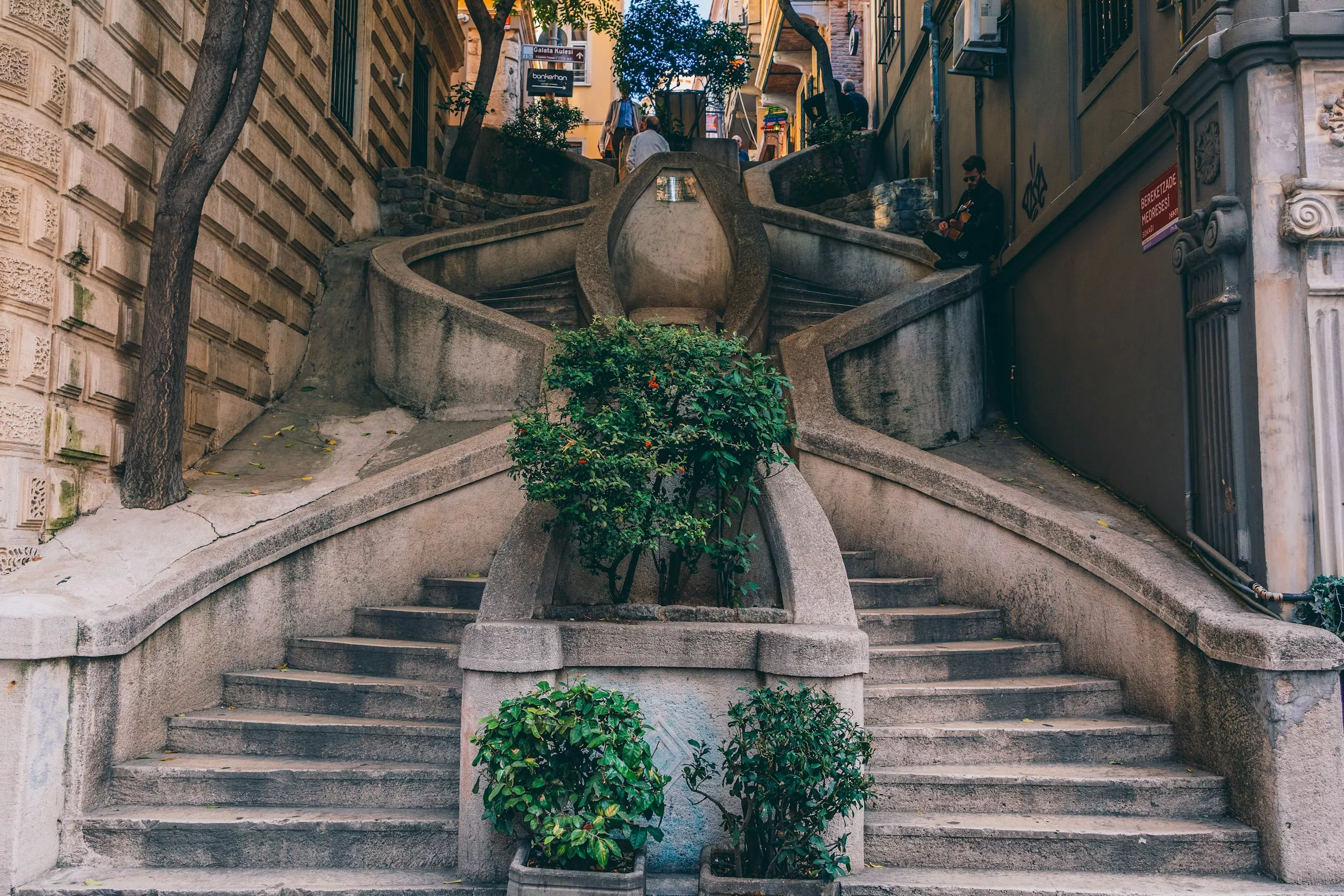
4. Kamondo Stairs — Karaköy's Art Nouveau Curves
The Kamondo Stairs are a short flight of curving, hourglass-shaped steps on Bankalar Caddesi in Karaköy, built by the Camondo banking family in the late 19th century. Their flowing, double-curve Art Nouveau geometry — best shot head-on from the bottom — has made them a cult favourite among architecture and street photographers.
The trick here is light, not timing of crowds: the pale stone blows out in hard sun, so soft midday shade or an overcast hour renders the curves far better than bright noon. Shoot straight up from the base for the symmetrical hourglass, then climb a few steps and turn back for the top-down spiral look. It's a free, public stairway in a busy banking street, so it takes five minutes — slot it between the Galata Tower uphill and the Galataport waterfront downhill.
5. Hagia Sophia — Domes, Mosaics and the Sunrise Square
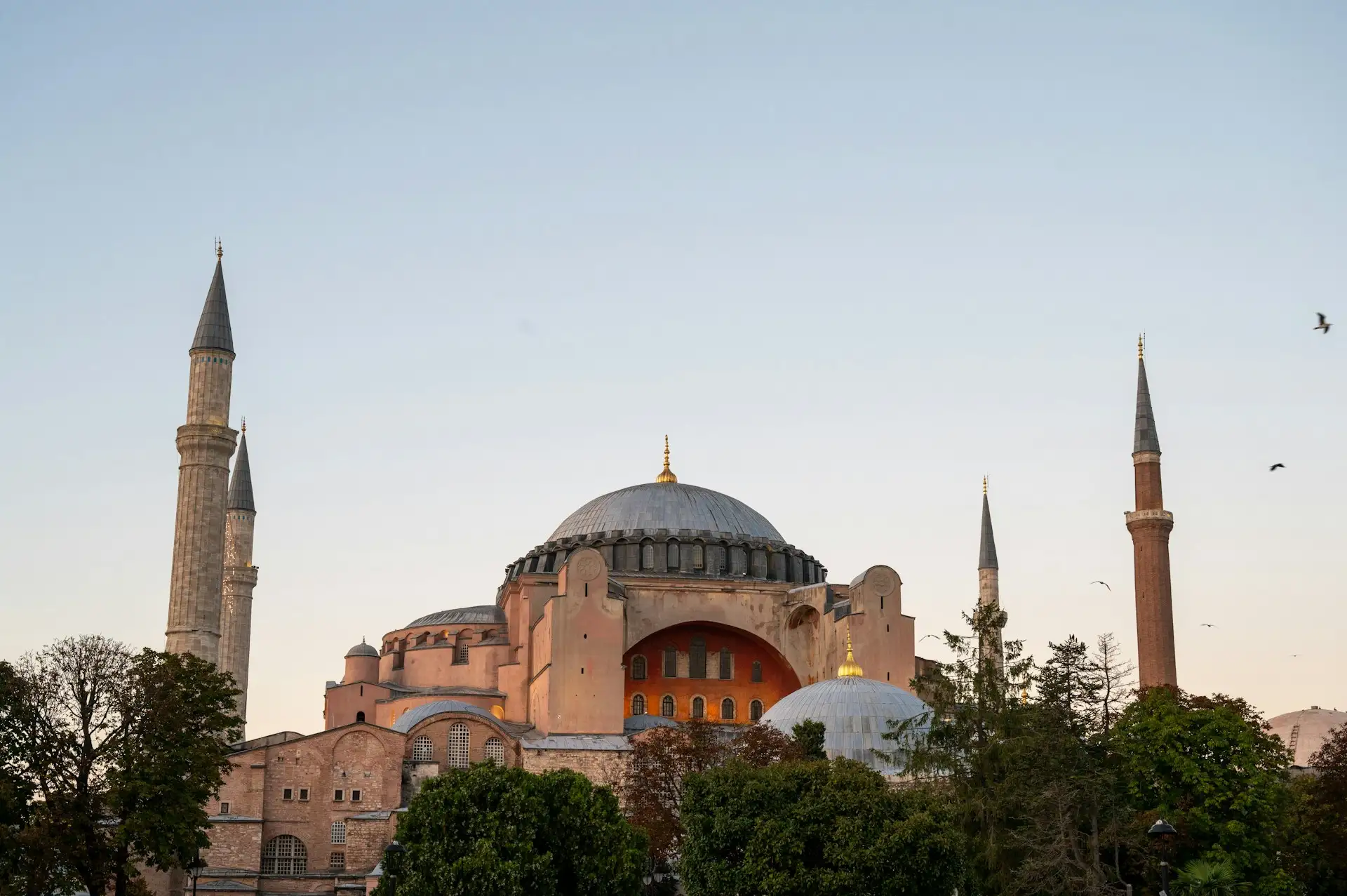
Hagia Sophia is İstanbul's defining silhouette — a sixth-century domed basilica turned mosque whose exterior reads best from Sultanahmet Square at sunrise, before the crowds arrive. Inside, the surviving Byzantine gold mosaics and the vast central dome are the photographic draw, though it now functions as a working mosque rather than a museum.
Hagia Sophia was reconverted to a mosque in July 2020, which changed the rules for visitors: entry is free, access works around the five daily prayers rather than museum hours, and a dress code applies. The Byzantine mosaics remain visible. For the exterior, the sunrise window gives you an empty square and warm side-light on the domes; the axis facing the Blue Mosque puts both icons in a single frame. For entry timing, prayer-time gaps and the best hour to photograph the interior, see our full Hagia Sophia visitor guide.
6. Blue Mosque — Six Minarets and İznik Blue
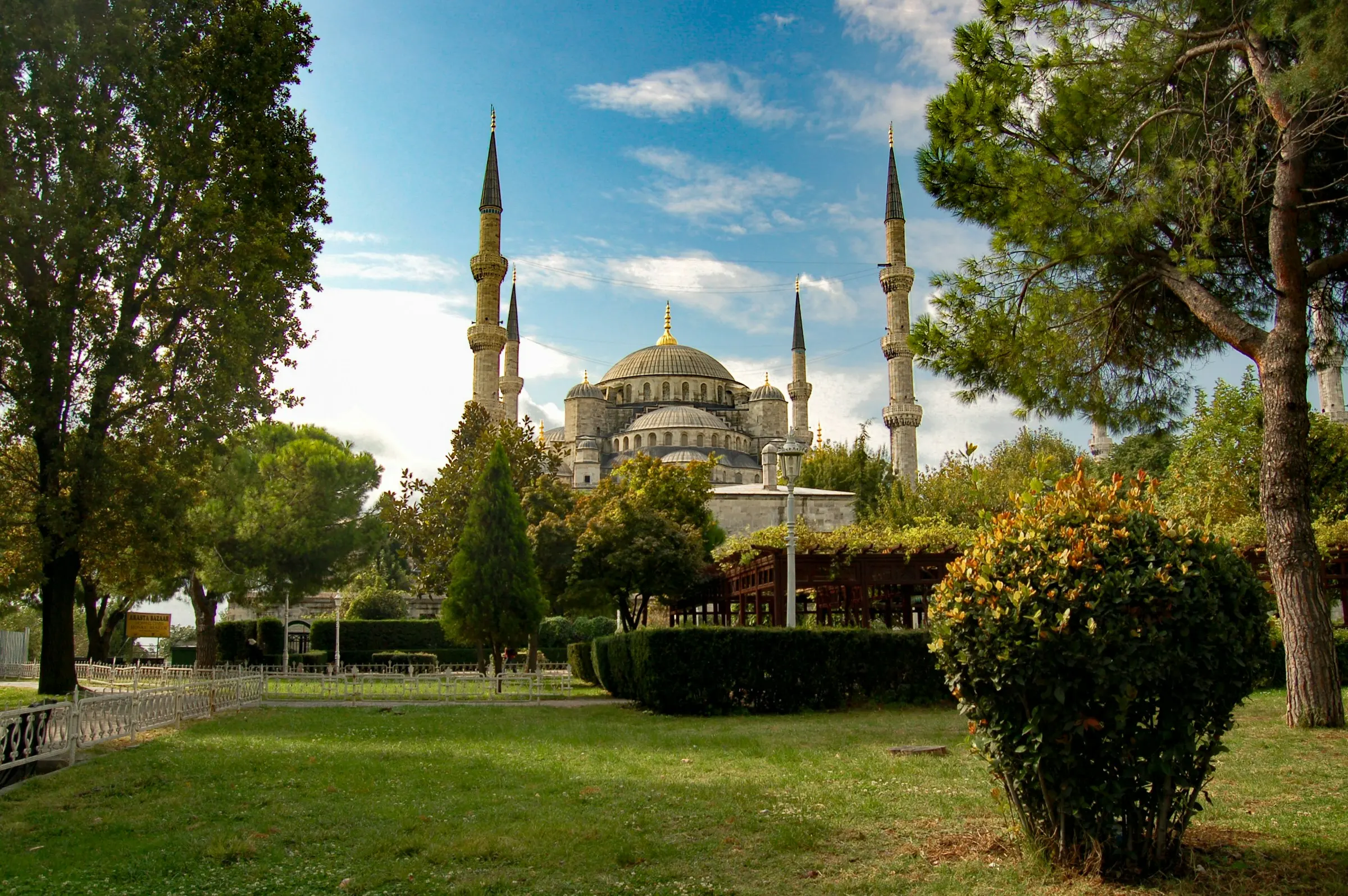
The Blue Mosque (Sultan Ahmed Mosque) faces Hagia Sophia across Sultanahmet Square and gives you the city's most symmetrical exterior shot: six minarets and a cascade of domes, floodlit at blue hour. Inside, the more than 20,000 handmade İznik tiles that give the mosque its name turn the upper walls and dome a deep cobalt.
Set up along the long axis of the square or beside the central fountain, where the cascading domes line up cleanly; blue hour, when the floodlights balance the last of the daylight, is the magic window. The interior reopened after a multi-year restoration with the tilework refreshed. As an active mosque, it closes to tourists during the five daily prayers and enforces a dress code — no flash, and keep clear of worshippers. Pair it with Hagia Sophia in a single sunrise-to-mid-morning peninsula loop.
7. Basilica Cistern — Moody Underground Symmetry
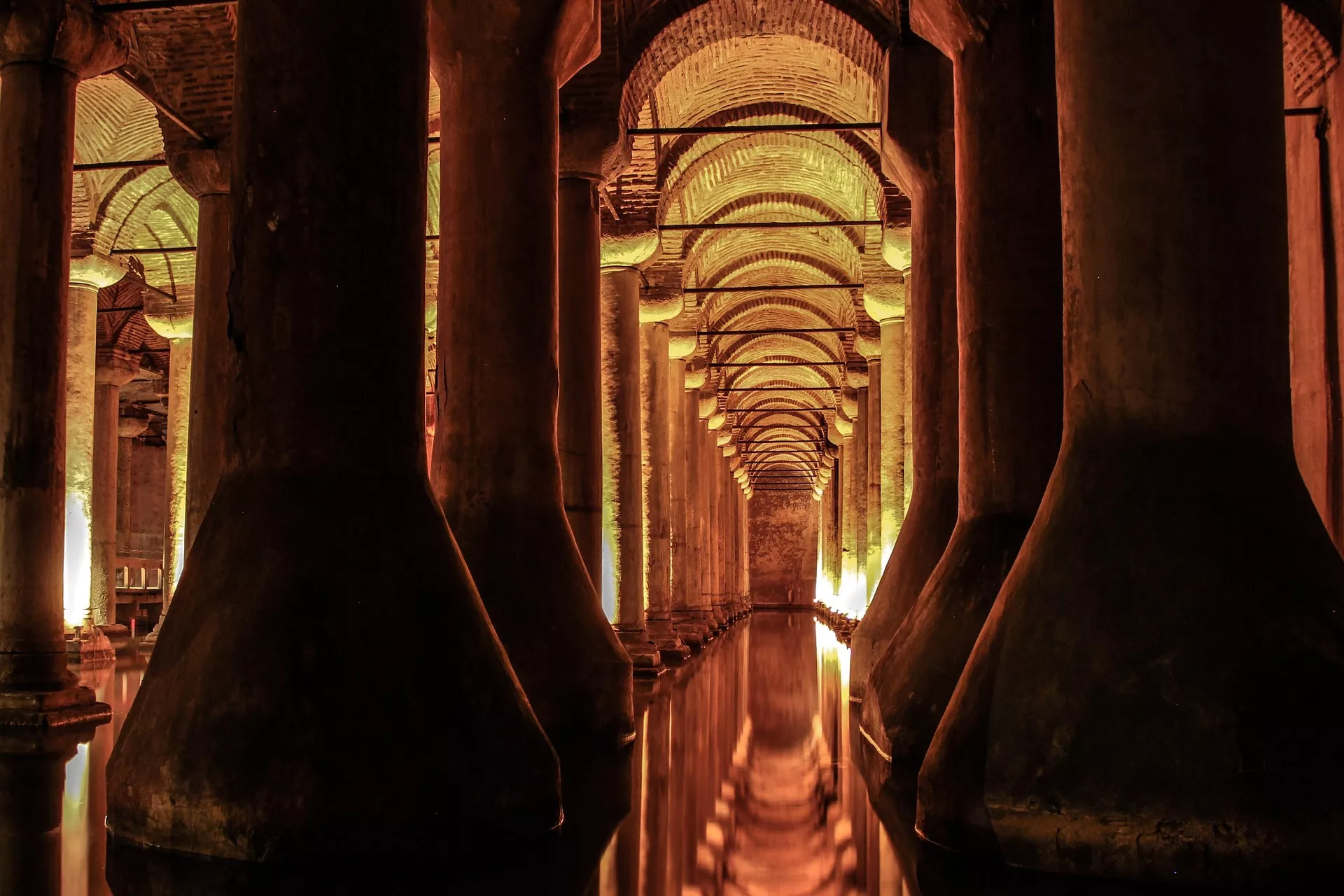
The Basilica Cistern is İstanbul's most atmospheric interior to photograph: a sixth-century underground reservoir built under Emperor Justinian I around 532 CE, where 336 dramatically uplit columns reflect in shallow water and two famous Medusa-head column bases sit half-submerged in the far corner.
The cistern reopened in 2022 after a major restoration that added contemporary lighting and art installations (Daily Sabah, Istanbul's Basilica Cistern reopens after restoration, 2022). The signature shot is straight down a colonnade, catching the reflections on the still water; the two Medusa heads — one turned sideways, one upside down — are the other must-frame. It's a low-light space, so steady your camera and lift the ISO rather than relying on flash, and check the current tripod policy on arrival. Forty minutes is plenty, and it sits directly across the street from Hagia Sophia — the easiest add to a Sultanahmet morning.
8. The Grand Bazaar — Lanterns and Painted Vaults
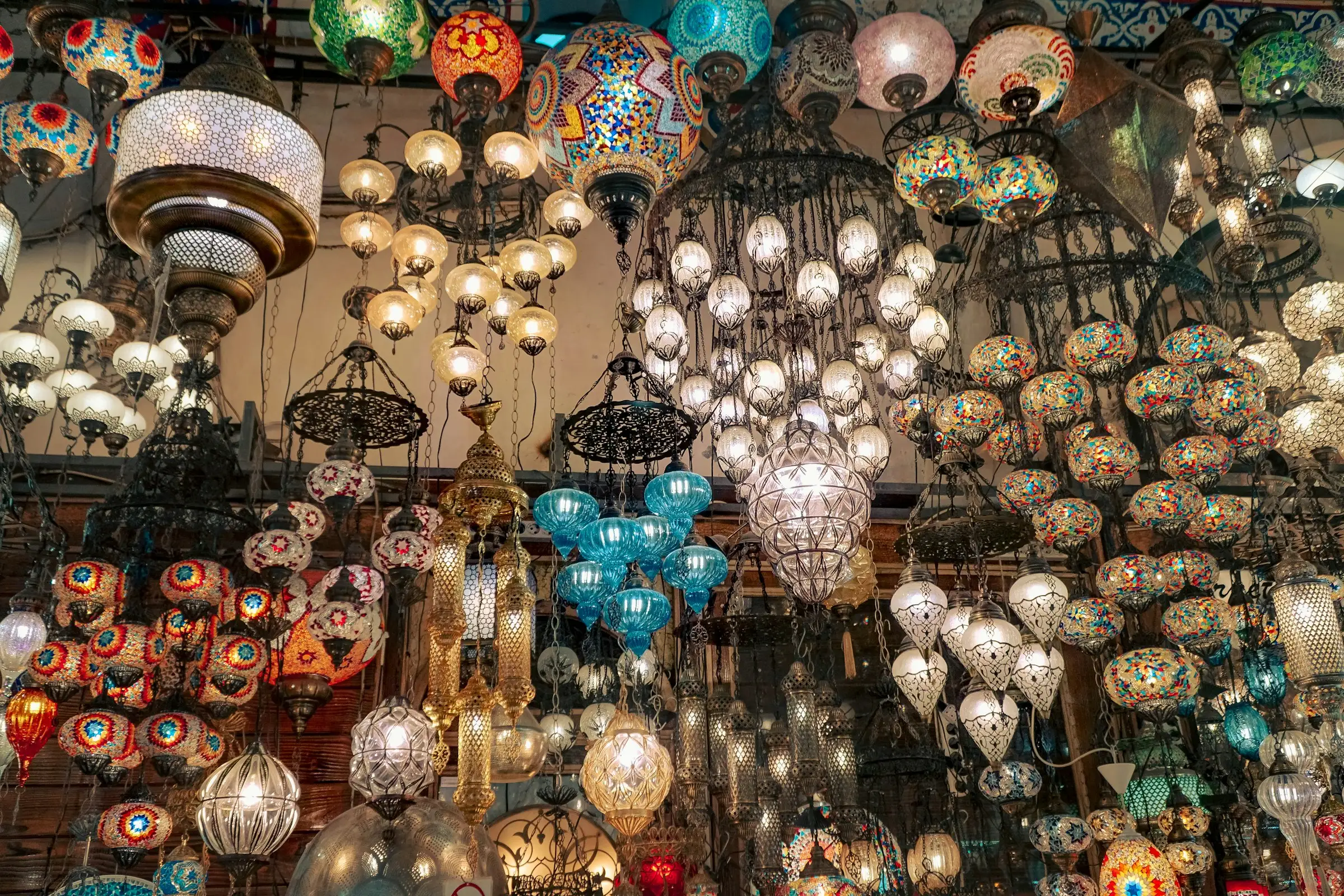
The Grand Bazaar is one of the world's oldest and largest covered markets — 61 covered streets and around 4,000 shops under painted, vaulted ceilings — and the mosaic-glass lamp shops of its lantern lanes are its signature shot. The main Kalpakçılar avenue and the older Cevahir Bedesten core photograph best in mid-morning light, when the sun reaches down through the skylights.
Frame the hanging mosaic lamps from just inside a shopfront for the glowing-colour shot everyone wants, then look up: the painted ceiling vaults and arched perspectives are an easy, graphic frame. The carpet and gold shops add saturated colour. The bazaar closes on Sundays, and you should always ask before photographing a trader. It pairs naturally with Süleymaniye uphill and the Spice Bazaar downhill — and if the labyrinth swallows you, our Grand Bazaar survival guide covers the layout and the lantern lanes.
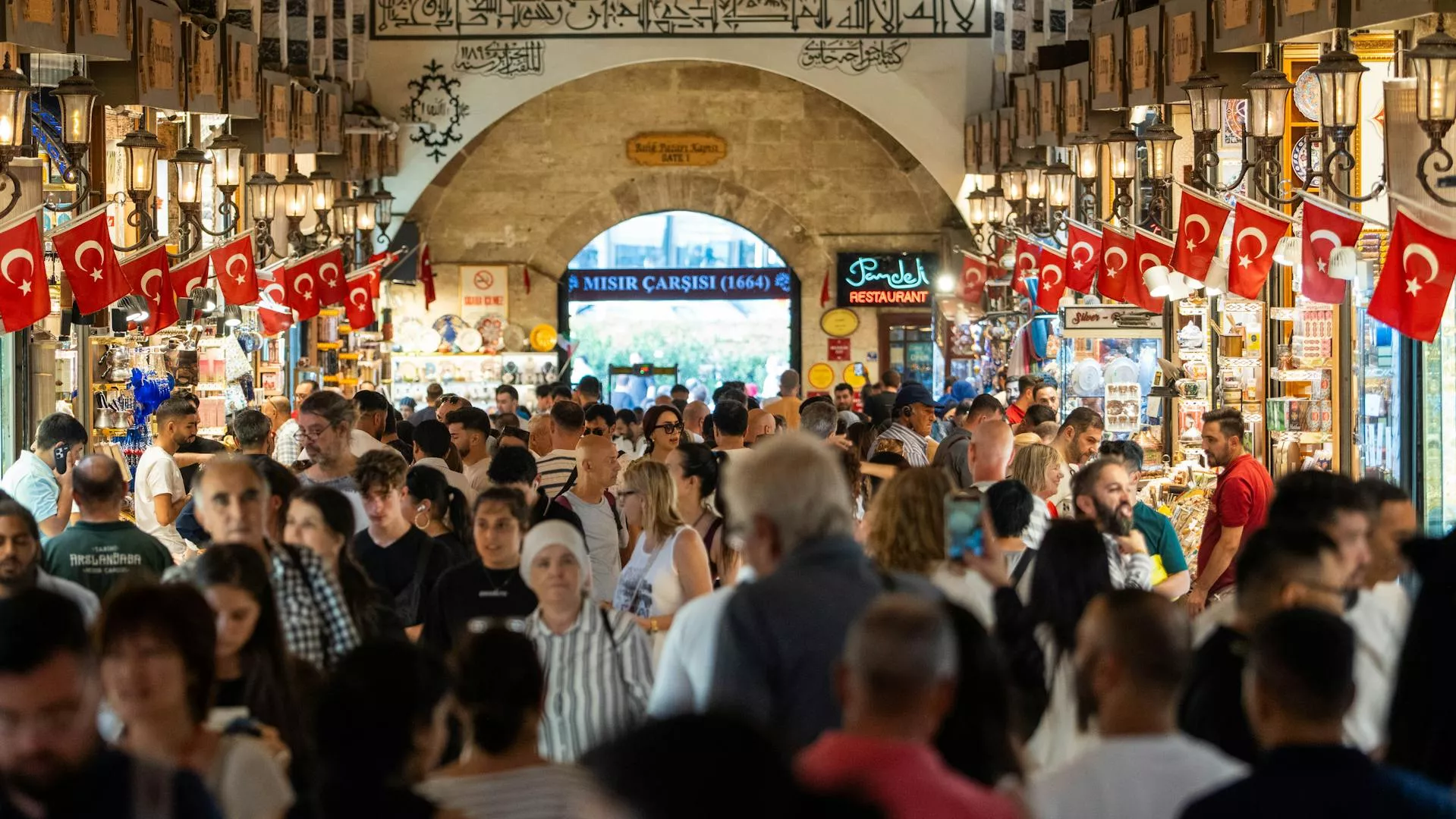
9. Spice Bazaar — Pyramids of Colour
The Spice Bazaar (Mısır Çarşısı) in Eminönü is a short, L-shaped 17th-century market — completed around 1664 as part of the New Mosque complex — piled high with cones of saffron and sumac, walls of Turkish delight, and rows of hanging lamps. The density of colour and the light falling through its arched windows make it one of İstanbul's most saturated photo stops.
The spice-cone and lokum-wall shots are the obvious draw; get in close on a single stall for the colour, then step back and shoot down the arch toward the window light for depth. It's smaller and busier than the Grand Bazaar, so come mid-morning before the crowds thicken, and ask vendors before close-ups — many will happily arrange a cone for you. The bazaar sits steps from the Galata Bridge and the Eminönü ferry piers, which makes it an easy pairing with the next spot.
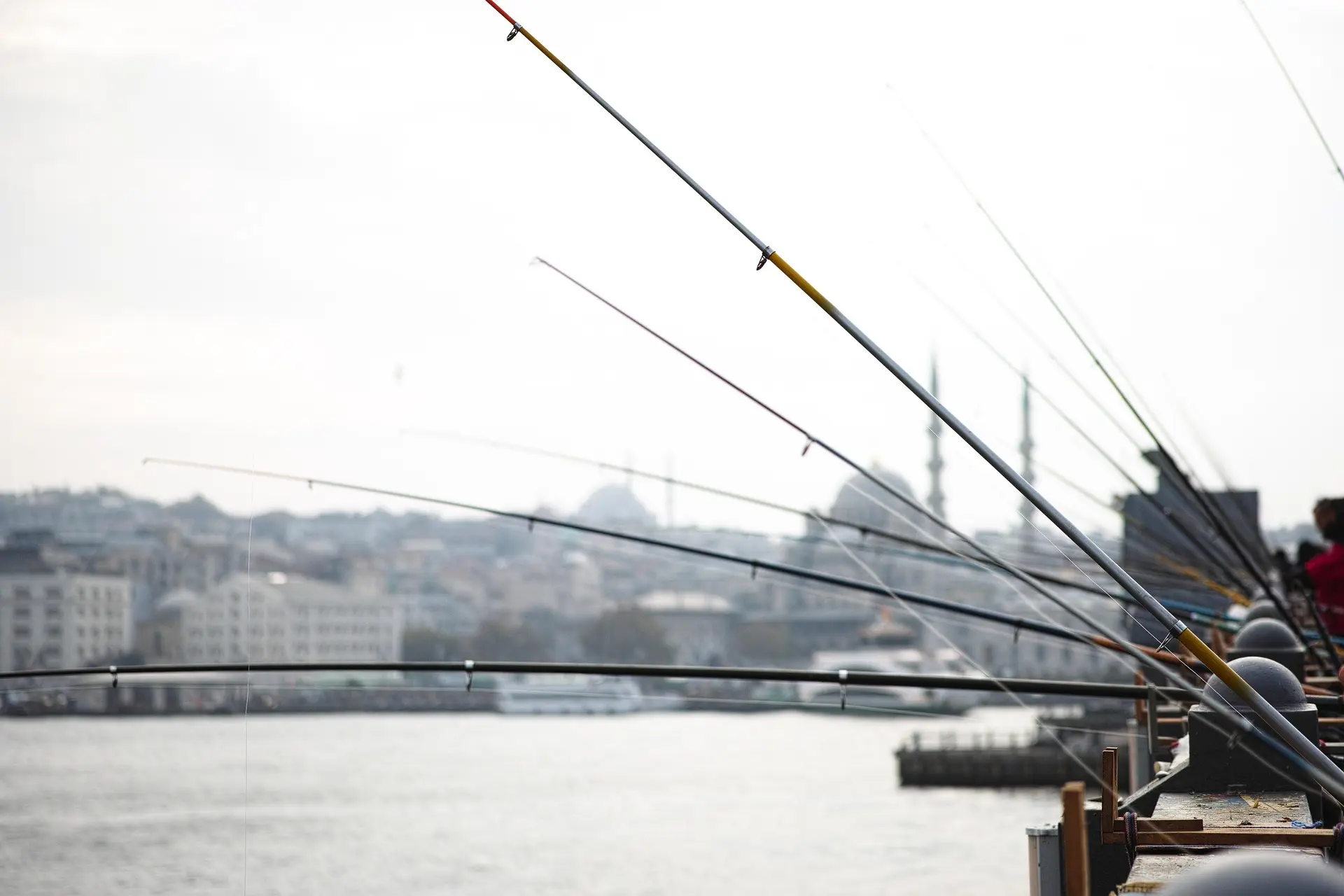
10. Galata Bridge — Fishermen, Ferries and the Skyline
The Galata Bridge over the Golden Horn is İstanbul's classic street-photography stage: rows of rod fishermen along the rails, ferries crossing behind them, and the domes and minarets of the old city stacked up at sunset. The silhouetted-fishermen-against-the-skyline frame is the one most photographers come for.
Work the upper deck at golden hour, when the low sun backlights the fishing rods and the crossing ferries add motion to the frame; the gulls wheeling over the water are a bonus. For a different angle, drop to the lower deck, where the fish restaurants give you a tighter, human-scale scene. Shoot west toward Süleymaniye and the New Mosque for the layered-skyline backdrop. The bridge is also the walking link between Eminönü's bazaar quarter and Karaköy, so it threads neatly between several spots on this list.
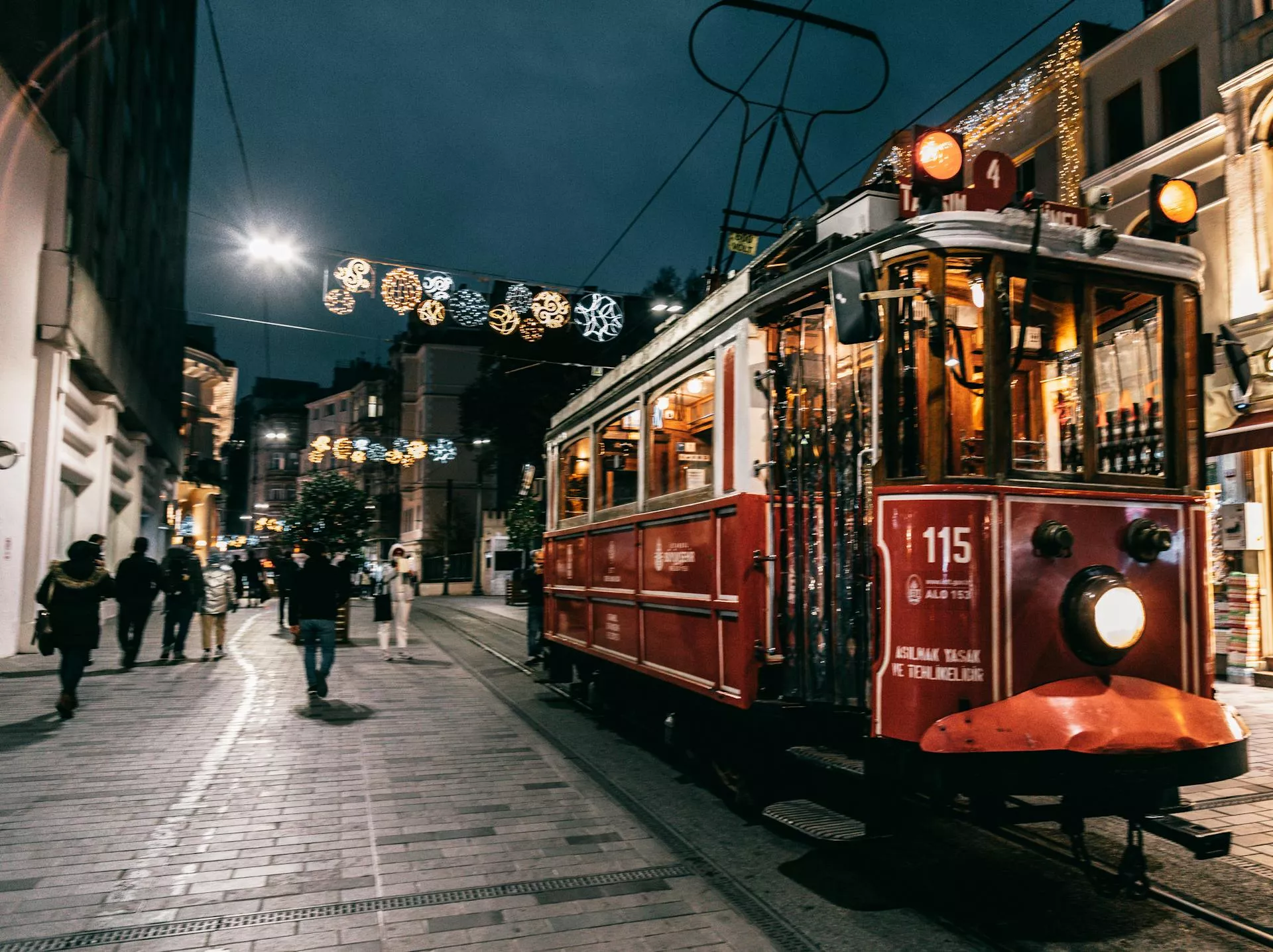
11. İstiklal Avenue & the Nostalgic Tram
İstiklal Avenue is Beyoğlu's mile-long pedestrian spine, and its single red nostalgic tram trundling through the crowd is one of İstanbul's most recognisable street shots. At the avenue's lower end, the historic Tünel funicular — opened in 1875 and one of the world's oldest underground railways, second only to the London Underground — adds a second period frame.
The tram shot works best at blue hour, when the carriage is lit and the avenue's signs and shopfronts glow; plant yourself at a slight diagonal and let the tram come toward you through the crowd for motion and depth. The little Tünel station at the bottom is a charming, low-key frame in its own right. From here you're a short walk from Galata, so it pairs with the Galata Tower cluster downhill. Avoid the harsh midday flatness — İstiklal is a night-and-dusk performer.
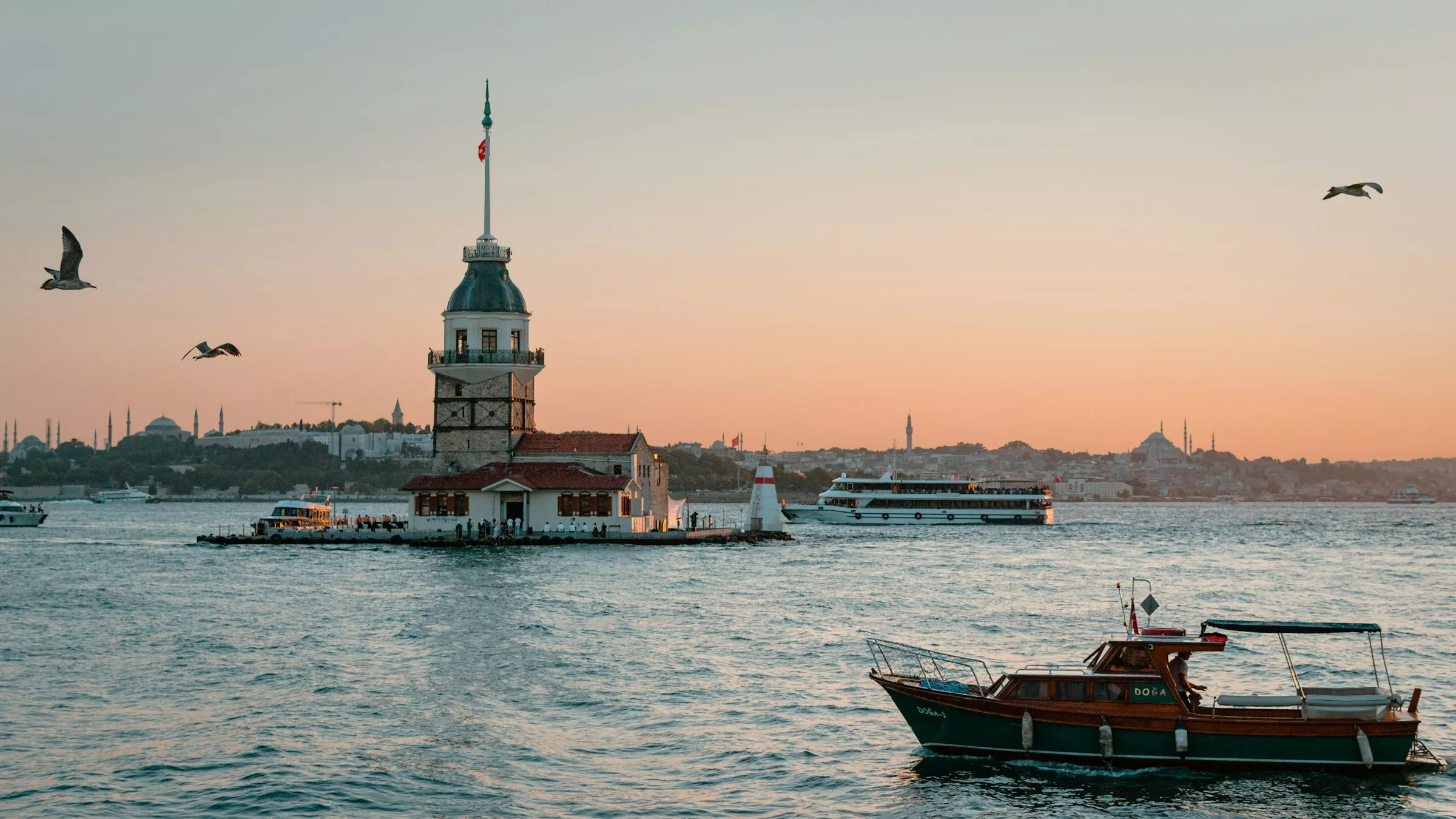
12. Maiden's Tower — The Islet on the Bosphorus
The Maiden's Tower (Kız Kulesi) sits on a tiny islet where the Bosphorus meets the Sea of Marmara — a lighthouse-topped tower with a history reaching back to Byzantine times. The postcard frame is from the Salacak waterfront on the Asian side at sunset, with the tower silhouetted on the water and ferries sliding past.
The tower reopened in May 2023 after a two-year restoration (Müze İstanbul, Maiden's Tower, 2023), and you can take a short boat out to it — but the best photographs are from the shore, not the islet. Salacak in Üsküdar is the classic vantage; a longer lens from the European side at Kabataş also works. Time it for the half-hour before sunset, when the sky behind the tower turns. Reaching Salacak means a ferry across to the Asian shore, so treat it as its own short outing rather than a quick stop.
13. Süleymaniye Mosque — Courtyard Grandeur and a Golden Horn Panorama
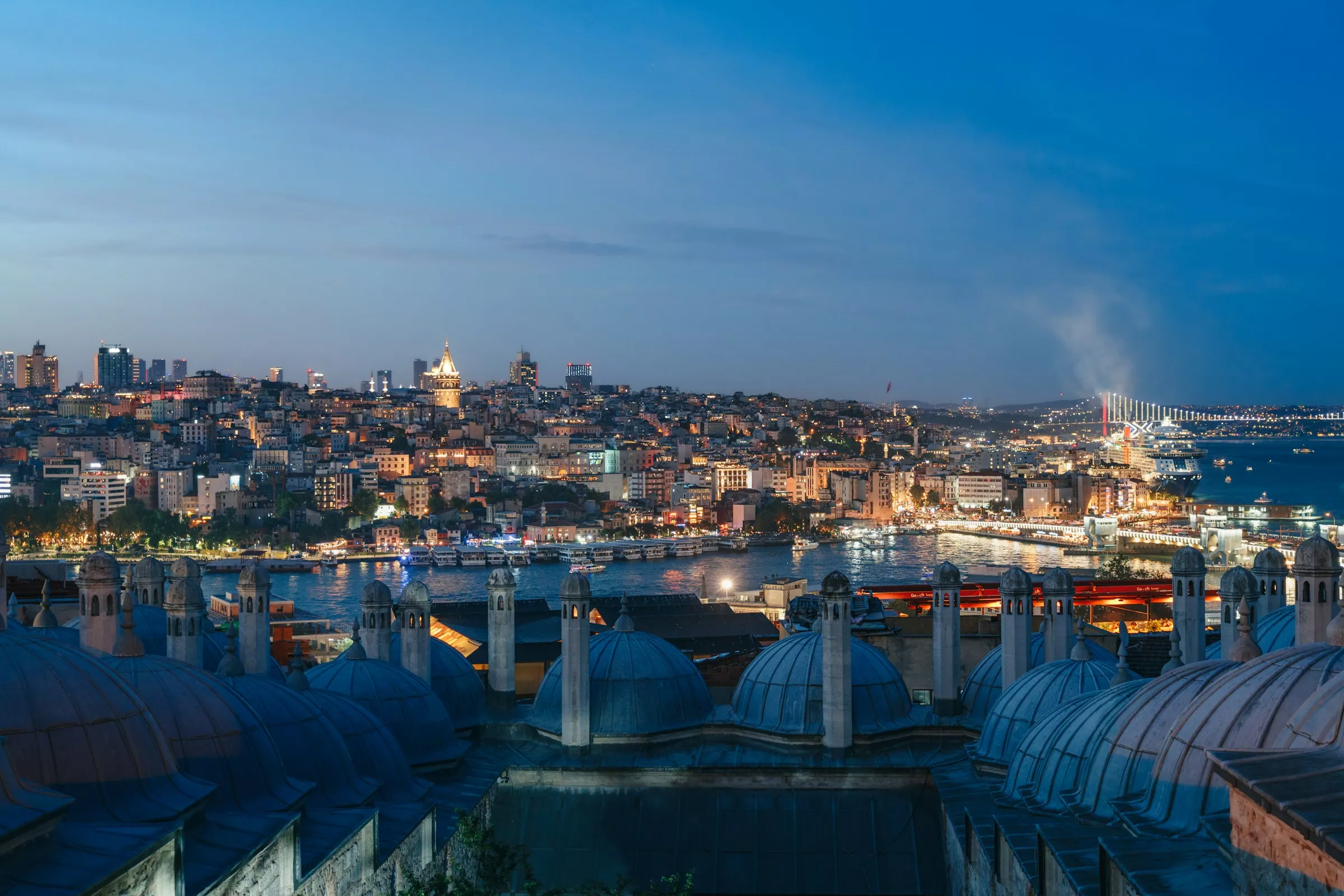
Süleymaniye Mosque, the architect Mimar Sinan's masterpiece built between 1550 and 1557, crowns the third hill above the bazaar quarter. Its vast arcaded courtyard frames clean architectural symmetry, while the terrace behind it opens one of the best free panoramas in the city — the Golden Horn, the bridges and Galata laid out below.
Frame the courtyard arcades for the graphic, repeating-arch composition, ideally late afternoon when the side light models the domes and the stone warms up. Then walk to the rear terrace for the wide Golden Horn view — a far calmer spot than the crowded Sultanahmet overlooks. As a working mosque, the usual etiquette applies: modest dress, shoes off inside, no flash. It's an uphill walk from the Grand Bazaar, so the two make a natural bazaar-quarter morning together.
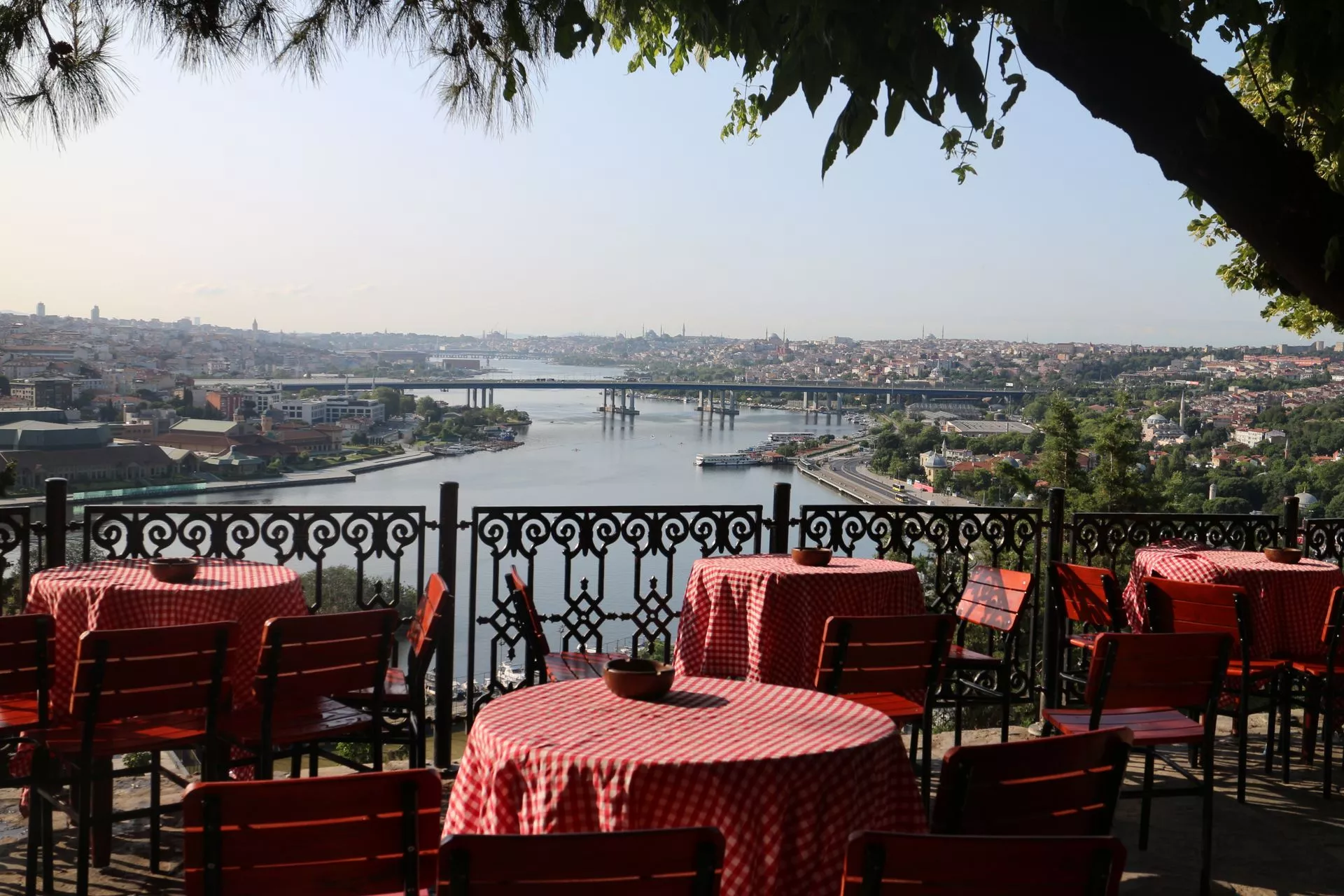
14. Pierre Loti Hill — The Golden Horn From Above
Pierre Loti Hill, above the Eyüp district at the head of the Golden Horn, delivers İstanbul's classic elevated water view — the Horn curving inland between minaret-studded hills. A short cable car climbs from the Eyüp shore to the namesake café terrace, and both the ride and the panorama are the shot.
The view down the Golden Horn is the headline frame, best at sunset when the water catches the light; the cable car cabins make a useful foreground element on the way up. The historic Eyüp Sultan Mosque area sits below, worth a wander before you climb. Mind your schedule, though: Pierre Loti is out at the far head of the Horn, a deliberate trip by bus or ferry plus the cable car, so it sits better alongside a Balat day than a peninsula one.
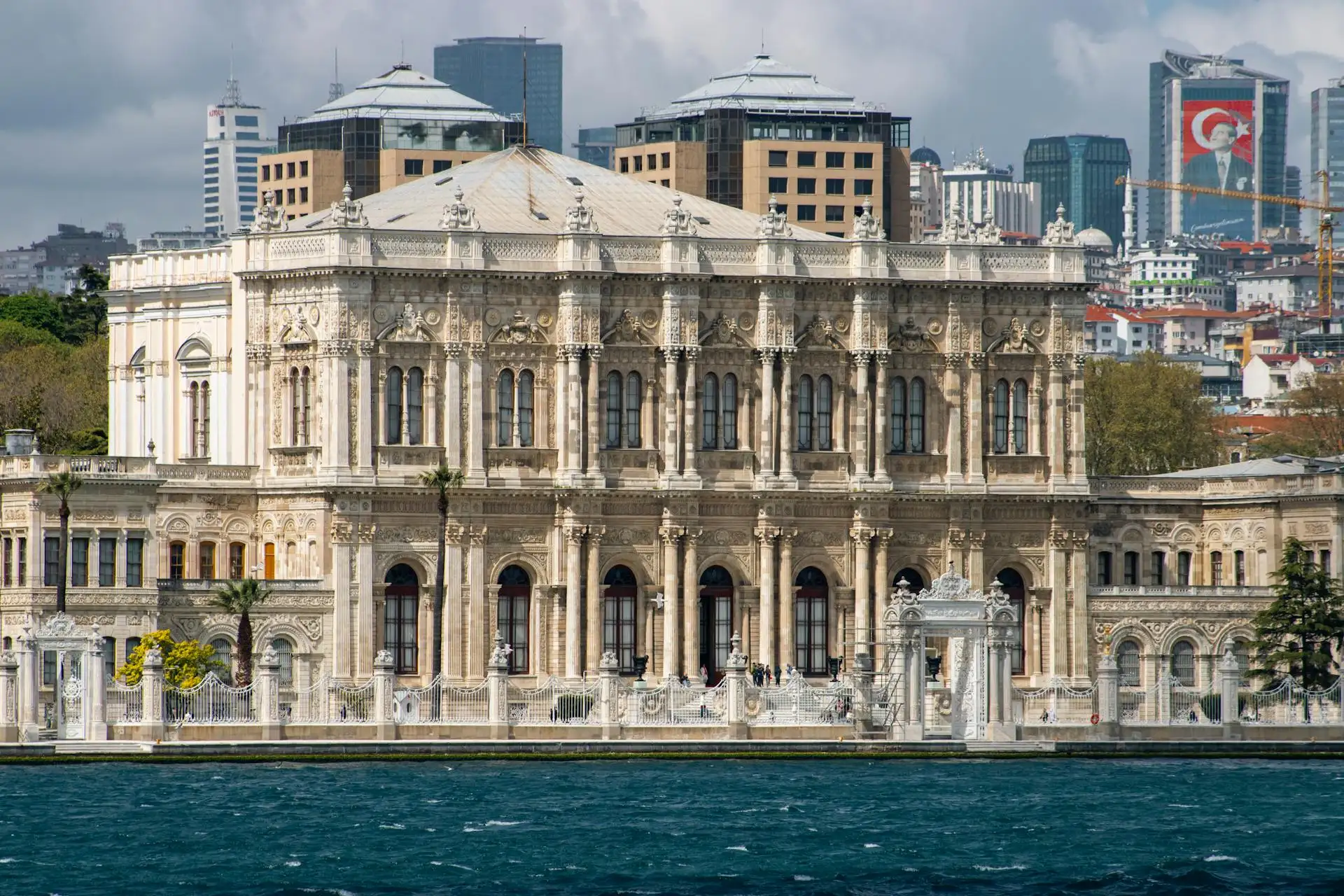
15. Dolmabahçe Palace — Waterfront Baroque
Dolmabahçe Palace lines the Bosphorus at Beşiktaş with European Baroque excess. It replaced Topkapı as the imperial residence in 1856, and its sea-facing façade, the elaborate Imperial Gate, and a free-standing Clock Tower all frame cleanly against the water. The gates and tower are the standout exterior shots.
Come in the morning, when the light is on the waterfront façade and the gates. The gilded Imperial Gate rewards a tighter detail shot; the Clock Tower frames well with the palace behind it. The formal garden and its fountain give you a softer foreground. Interior photography is restricted in parts of the palace, so check the current rules on arrival rather than counting on inside shots, and note the palace traditionally closes on Mondays. Reach it by the T1 tram to Kabataş and a short walk; it isn't walkable from Sultanahmet. Its opulent interior gets the full treatment in our İstanbul museums guide.
16. Gülhane Park — Tulips and Tree-Lined Avenues
Gülhane Park, the former outer garden of Topkapı Palace, turns into one of İstanbul's most photogenic spaces each spring, when the İstanbul Tulip Festival carpets its beds in colour. Held every April and organised by the İstanbul Metropolitan Municipality, the festival plants millions of tulips across the city's parks (Hürriyet Daily News, Millions of tulips blossom in Istanbul, drawing crowds to iconic parks, 2025).
In April, the tulip beds and the park's long tree-lined avenue are the draw — shoot in the morning before the paths fill, low to the ground for a foreground of blooms leading toward the trees. Emirgan Park, further up the Bosphorus, holds the festival's largest displays if you want the densest fields. Manage expectations on timing, though: outside tulip season Gülhane is a pleasant, leafy park rather than a headline photo stop. It adjoins the Topkapı first gate and the Archaeology Museums, an easy add to a Sultanahmet morning.
İstanbul's Most Photogenic Passages & Lanes
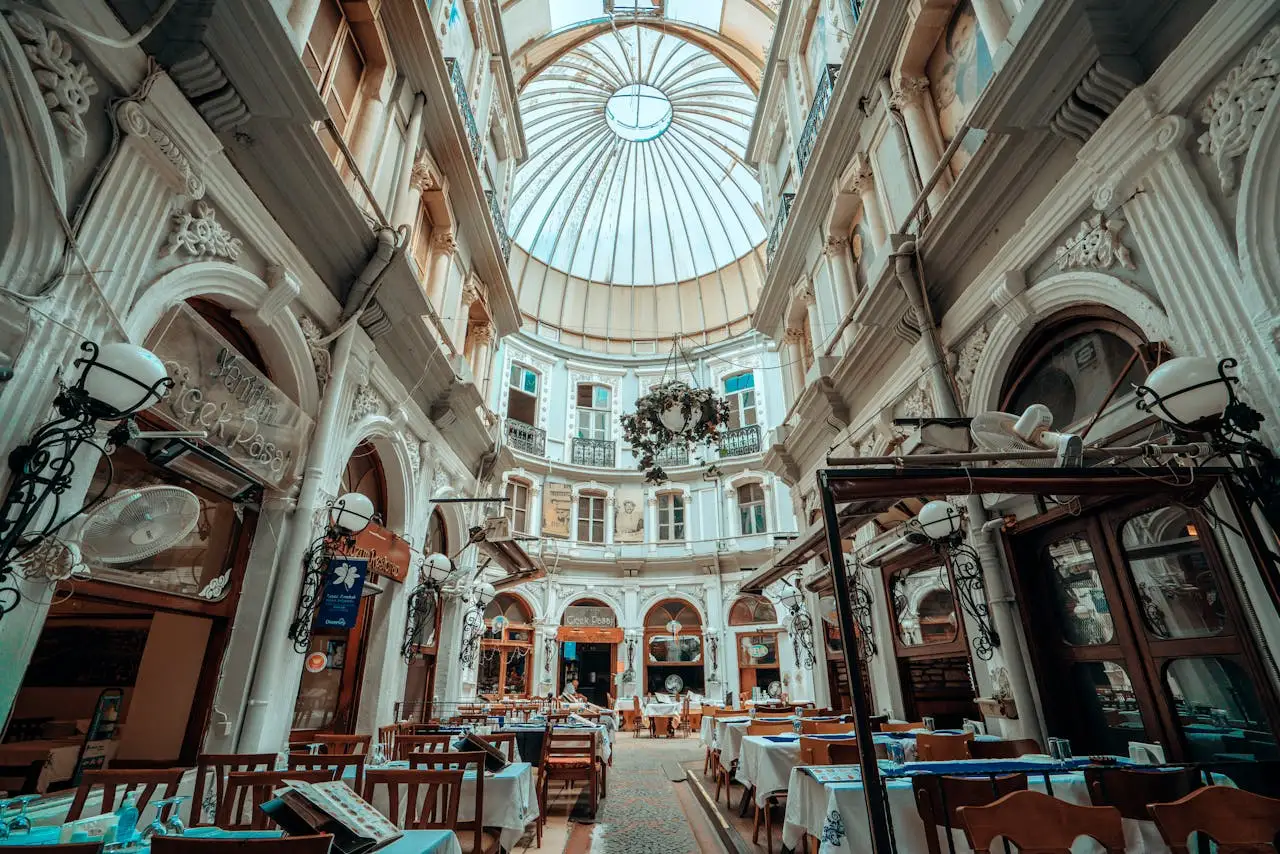
Beyond the headline icons, Beyoğlu hides a cluster of atmospheric passages and lanes that reward a wander with a camera. The Flower Passage, Asmalı Mescit and Nevizade Street each pack ornate façades, hanging lamps and evening crowd-life into tight, characterful frames just off İstiklal Avenue — and all come alive after dark.
The Flower Passage (Çiçek Pasajı) is an ornate 19th-century glass-roofed arcade of meyhanes (taverns); the arched glass ceiling and warm lamplight are the shot, best caught in the early evening. Asmalı Mescit is a tangle of narrow lanes strung with lights and lined with meyhanes — shoot it at dusk, when the string lights switch on and the tables fill. Around the corner, Nevizade Street is the packed tavern lane behind the Flower Passage, all clustered tables, lanterns and evening buzz, ideal for street-life frames. One caveat: these are nightlife scenes, quiet and half-shuttered by day, so save them for the evening.
More Bosphorus & Waterfront Frames
If you have a second or third day, a few more spots round out the Bosphorus photo map. Rumelihisarı's fortress walls, the Asian-shore palaces of Beylerbeyi and Küçüksu, and the modern Galataport waterfront each offer a distinct frame — though all of them need transit or a cruise to reach.
Rumelihisarı, the fortress Mehmed II built in 1452 ahead of the conquest of Constantinople, is dramatic from the waterfront below or from a passing Bosphorus ferry. Beylerbeyi Palace, the imperial summer residence on the Asian shore, frames neatly beneath the 15 July Martyrs Bridge. Küçüksu Pavilion, a Rococo jewel-box hunting lodge nearby on the Asian side, is a frequent Bosphorus-cruise stop. And Galataport, the regenerated Karaköy cruise-port waterfront, offers clean modern lines and Bosphorus views right beside İstanbul Modern. These are second-trip frames — worth it when you have time, but don't crowd them into a tight first visit.
How to Photograph İstanbul: Light, Etiquette and the Rules
Three things separate keepers from snapshots in İstanbul: timing the light, respecting mosque etiquette, and knowing that drones are heavily restricted over the city. Plan around all three and the shots fall into place — ignore them and you'll fight crowds, harsh sun, and the occasional firm "no."
Best light by area. Shoot the Hagia Sophia and Blue Mosque squares at sunrise, before the peninsula wakes. Balat and the bazaars suit mid-morning, when light reaches into the streets and skylights. The Süleymaniye terrace glows in late afternoon. Save Ortaköy, the Galata Bridge, Maiden's Tower and Pierre Loti Hill for sunset and blue hour, when the water and the floodlit landmarks do the work.
Mosque etiquette. İstanbul's working mosques are free to enter and photograph outside the five daily prayer times — check a current schedule such as the Diyanet İstanbul prayer times before you go. Dress modestly: women cover their head and shoulders (scarves are usually available at the door), everyone removes their shoes, and you avoid flash and keep clear of anyone praying.
Drones. Don't plan on aerial shots. In Turkey, drones of 500 grams or more must be registered with the Directorate General of Civil Aviation (SHGM İHA registration system), and İstanbul's historic centre is restricted airspace that requires official permission. Treat the skyline as a ground-level subject.
Respect for residents. Balat and Fener are lived-in neighbourhoods, not photo sets — don't block doorways, keep tripods and noise down, and be aware that some staged "Instagram" café corners are commercial props rather than the real street.
If you'd rather shoot to a plan, save the spots above to a single map. Each one is a pin on Stadtly — drop the frames you want, see which ones cluster together for a morning, reorder them for your dates, and export the map as a PDF for the trip.
👉 Open the İstanbul photo-spots map on Stadtly
For the full-trip framing, our İstanbul 24-hour walking itinerary and 48-hour first-timer itinerary build many of these spots into a walkable route.
Frequently Asked Questions
What is the most Instagrammable place in İstanbul?
The most photographed single scene is Ortaköy Mosque framed against the 15 July Martyrs Bridge, shot from the Ortaköy waterfront at blue hour. For a whole neighbourhood, Balat on the Golden Horn — with its rows of colourful terraced houses climbing the hillside — is İstanbul's most Instagrammed district.
Where are the colourful houses in İstanbul?
The famous colourful houses are in Balat and neighbouring Fener on the Golden Horn, especially around Kiremit and Vodina streets, where painted façades stack up the hillside. They photograph best in mid-morning light — but remember these are private homes, so shoot them quietly and respectfully.
When is the best time of day to photograph İstanbul?
Shoot Sultanahmet's Hagia Sophia and Blue Mosque at sunrise, before the square fills. Save the Bosphorus spots — Ortaköy, the Galata Bridge, Maiden's Tower and Pierre Loti Hill — for sunset and blue hour, when the water and floodlit landmarks glow. The bazaars suit mid-morning light through their skylights.
Can you take photos inside İstanbul's mosques?
Yes. Working mosques like the Blue Mosque, Süleymaniye, Ortaköy and Hagia Sophia are free to enter and photograph between the five daily prayers. Cover your head and shoulders, remove your shoes, avoid flash, and keep clear of worshippers. Plan your visit around prayer times rather than during them.
Are drones allowed in İstanbul?
Largely no. Turkey requires drones of 500 grams or more to be registered with the civil-aviation authority (SHGM), and the historic centre of İstanbul is restricted airspace requiring official permission. Don't plan on aerial shots of Sultanahmet or the Bosphorus — verify the current rules before bringing a drone.
Where is the best view of İstanbul for photos?
For free elevated views, the rear terrace of Süleymaniye Mosque and Pierre Loti Hill above Eyüp both overlook the Golden Horn. For a paid 360-degree panorama, the Galata Tower observation deck is the best single sweep of the peninsula, the Horn and the Bosphorus — go at golden hour.
Which İstanbul photo spots are free?
Most are. Balat's streets, the Galata Bridge, the bazaars, İstiklal Avenue, Ortaköy's waterfront, the Süleymaniye terrace and Gülhane Park cost nothing, and mosques are free to enter. The Galata Tower deck, the Basilica Cistern, Dolmabahçe Palace and the Pierre Loti cable car are ticketed.
Planning a trip to Istanbul?
Discover attractions, hotels and tours to build your perfect itinerary.
Explore Istanbul